Tuck Shops, Grazing & Supplements: Are We Getting it Wrong as Parents?
This week We are tackling some of Your questions on Baby Brunch!
Minerals & Supplements: Do kids actually need them? We broke down the essentials and how to safely navigate the supplement aisle.
The Tuckshop & Long School Hours: Between sports, extra classes, and long days, kids are burning massive energy. How do we tackle tuckshop temptations and pack enough fuel to keep them going?
The Holiday Disruption: School holidays and changing routines are a major concern for parents. When the structure of the school week vanishes, eating habits often get interrupted. We share tips on how to keep the peace when routines get disrupted.
Dietitian, Jade Seeliger, joins us this week to answer these questions, and more.
Brought to you by Epi-Max Baby & Junior - Our Family, for Your Family. Supported by Jacaranda FM.
Also available on Apple Podcasts and Spotify.
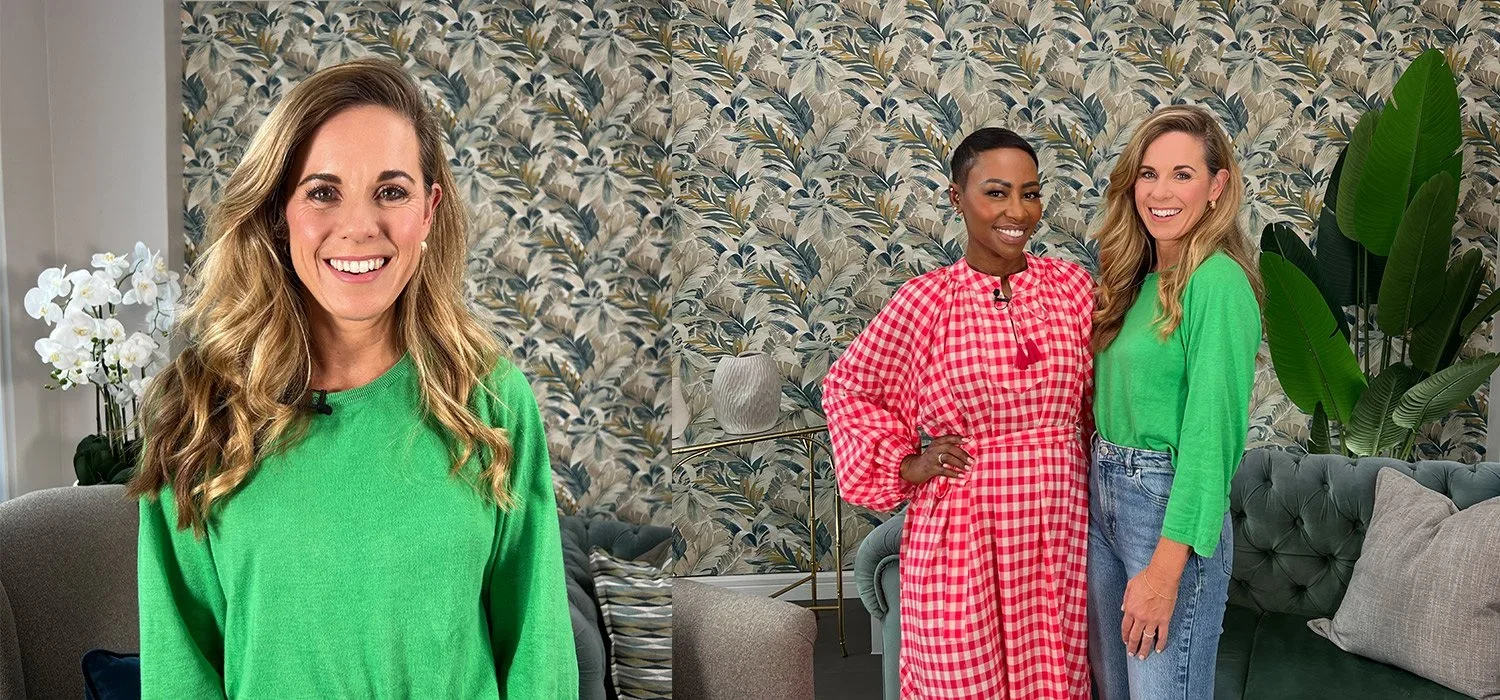
ABOUT JADE SEELIGER
I’m a business owner, registered dietitian, and mom to three energetic, constantly-hungry kids. My perspective on nutrition shifted profoundly when I became a mother and realised firsthand that “healthy” doesn’t always come easily when life gets busy.
I’m the founding member and director of Nutritional Solutions, a practice I co-founded in 2010, which has grown over the past 16 years into the largest private practice of dietitians in South Africa. Alongside my clinical work, I consult to a number of industry associations, including Dairy South Africa, Pork South Africa, and Avo South Africa, providing evidence-based guidance and practical nutrition insights.
Online, I’ve built a community of over 65,000 followers on Instagram and run several successful online programs designed to support women and families with eating well, feeling confident in their bodies, and prioritising their well-being within full, demanding lives.
My work is grounded in making nutrition practical, simple, and family-friendly. I’m passionate about celebrating beautiful food and encouraging a balanced approach to health, one rooted in real, whole foods and perfectly imperfect eating, rather than restriction or calorie counting.
Podcast Transcript
Prefer to read instead? Here’s the transcript from this episode of the Baby Brunch Podcast.
Short on time? Scroll to the key takeaways below.
ELANA AFRIKA-BREDENKAMP
Earlier this year, we had a conversation with registered dietitian Jade Seeliger about kilojoule counting, children’s diets and how to build a healthy lunchbox. It sparked some wonderful conversations and questions from parents.
So welcome to another Baby Brunch conversation, where we’re taking your questions back to our dietitian. Jade, thank you so much for joining us again.
JADE SEELIGER
It’s such a pleasure. It’s always good to be here. I love having conversations with you because they’re always fun and flow in all sorts of directions. I’m excited to see where this one goes.
ELANA AFRIKA-BREDENKAMP
Last time, we talked about kilojoule counting and building a beautiful lunchbox, but I’m a bit worried. I have many concerns, and I’m going to raise them because these questions came from parents.
It’s not just about healthy eating or the pressure of preparing healthy meals at home. It’s about what happens on the playground, at the tuck shop and whether supplementation is really necessary.
As a working mom, I often don’t have the time to plan an entire menu. Over the weekend, I spent time with some friends who are at home full-time, and I found myself feeling a little envious because they seem to have more time to plan meals.
So give me the facts. Am I doing the right thing for my children at the right stage? And perhaps you can give working moms a little grace, because we don’t always have time to build an entire menu.
JADE SEELIGER
Absolutely, Elana. I think the joy of healthy eating and giving children the right foods at the right ages is that it actually boils down to a handful of basics. It’s simple.
Too often, we complicate nutrition because we look at what other people are doing. We think that because another mom is feeding her child a salmon poke bowl with edamame beans, that child must be healthier. That’s definitely not necessarily the case.
There are a few basics we need to get right, and anyone can do that. Make sure your child is eating protein, including lean protein, carbohydrates that are less refined and less processed, high-fibre foods and healthy fats such as nuts, seeds, avocado and olives.
Don’t get lost in the details. Focus on the foundation. Get that right, and your child is on their way to a healthy life.
ELANA AFRIKA-BREDENKAMP
I just want to say there are no healthy poke bowls in this house! It’s pretty simple, with some cut carrots from my fridge, and I think I’m pretty much on track.
Thankfully, my children enjoy simple eating, so it’s quite easy to cook and prepare meals for them. But that brings me to something else.
We’re all on this health journey. People online are talking about Pilates, gym routines and supplementation, and I’m thinking, “Really? I’m at work!”
Last year, around World Food Day, we spoke about how children can be eating enough food but still be malnourished. How do we get that right?
JADE SEELIGER
I think our understanding of malnutrition has shifted over the years. Previously, when we thought about malnutrition, we thought about children not getting enough food. But today, malnutrition can look very different.
Children may be getting enough food, but the actual nutritional value is lacking. That’s a huge concern. It might be because they’re eating highly processed foods, relying on convenience foods, not eating a balanced diet or because they’re picky eaters.
They might also be grazers. I don’t know about you, Elana, but I see this so often. Children today are grazers. They’re not necessarily sitting down and eating a meal. They’re snacking, snacking, snacking.
I see it with my own children. Just before dinner, their hands are constantly going into the fridge. If they’re grazing on good-quality foods, that’s certainly better, but we still need to look at what they’re actually eating.
Malnutrition can mean getting enough food, but not enough of the right nutrients.
ELANA AFRIKA-BREDENKAMP
Are our children constantly going to the fridge and reaching for crisps because they’re hungry? Something tells me that we’re trying to feed them healthily, but perhaps they’re not eating enough.
JADE SEELIGER
I think they’re doing something similar to what adults do. Very often, they’re reaching for convenient, easily accessible and highly palatable foods.
It’s much easier to grab a packet of crisps, crackers, sweets or a little ice cream. It’s in a packet. They don’t have to prepare anything. They don’t even have to peel a naartjie!
It’s easier than taking cottage cheese and putting it on a cracker, or dishing up plain yoghurt and slicing an apple. For many children, that seems like too much effort. And adults do exactly the same thing.
ELANA AFRIKA-BREDENKAMP
Is healthy eating a lot of work? Because it sounds like work!
JADE SEELIGER
I think it requires some awareness, and it depends on what’s available. If you’ve got healthy food in the fridge, that’s what you’re going to eat.
A little preparation and organisation definitely help, but dishing up some yoghurt and grabbing a piece of fruit isn’t hard work. It’s about educating children on what they can eat.
My children will open the fridge and say, “Mom, there’s nothing to eat!” And I’m thinking, “The fridge is completely full!”
There’s hummus, cottage cheese, yoghurt, fruit, wholewheat bread and cheese. There’s so much they can make. They just haven’t learned to recognise the possibilities.
ELANA AFRIKA-BREDENKAMP
I’m actually salivating a little because I do follow a healthy diet. But I had a little smile when you were talking about healthy eating because my whole day can be healthy, and then suddenly there’s football on television.
That’s when I reach for the chocolate-covered peanuts! The other night, I ended up eating half a bag of salt-and-vinegar chips, and it was delicious.
So can we give ourselves permission to graze sometimes? Surely, if I’ve been eating well the whole week, I can sit down and enjoy my chocolate-covered peanuts?
JADE SEELIGER
I think we need to look at what the trigger is. Are you reward eating? Is it because you’ve had a long day, you’ve done everything for the children, you’ve worked and now you feel you deserve something?
ELANA AFRIKA-BREDENKAMP
No, it’s because of the football!
JADE SEELIGER
Well, at least that’s over, so you can’t use that excuse anymore!
But there’s something I call “series snacking”. It’s when the television goes on and we’ve created this association that if we’re watching something, our jaws must be moving.
Our children do the same thing. They see Mom and Dad eating crisps or chocolate-covered peanuts while watching television, and they want a snack too.
The concern is unconscious eating. We’re not paying attention to what we’re eating or how much we’re eating. Suddenly, you look down and the packet is empty. And you think, “Who ate all of that?” It was you!
Of course, food is meant to be enjoyed. I enjoy chocolate-covered peanuts as much as you do. But we need to be aware of when and why we’re eating, rather than relying on this unconscious habit of eating without noticing how much we’ve consumed.
ELANA AFRIKA-BREDENKAMP
Jade, I know you’re incredibly gracious when speaking to parents, but I want to share something.
Last year, I went to see a dietitian. Before that, I’d never really had an issue with food. It didn’t necessarily show in my body, but going into menopause, I realised I needed to make some changes.
It took a lot of effort to make that appointment. And for three months, I fought with her! I remember sitting in her chair saying, “I’m actually not sure why I’m here because I’m not overweight.”
Eventually, I came to the conclusion that I was there because I needed food education. When I changed my mindset, that’s when it started working for me.
And I’ve realised something about parenting: my children do what I do. We’ve always had a healthy home, but until I changed my understanding of nutrition and made it work for me, I wasn’t necessarily getting it right for my family either.
Now, when I talk to friends about menopause, perimenopause, bloating or concerns about weight, I’ll sometimes ask, “Have you seen a dietitian?” And it’s as though I’ve said something terrible! Nobody wants to hear it.
I know I should sometimes keep my advice to myself because I’m not a registered dietitian. I’m the host of Baby Brunch! But I’ve seen how much it helped me.
Do you experience that resistance in your practice? Because perhaps the problem starts with us as parents. If we change our own habits, maybe we can help our children.
JADE SEELIGER
Absolutely. Change is difficult, and eating is something we have to do numerous times a day. We also have to get our children to eat numerous times a day.
When you think about adding another responsibility to your to-do list, it can feel overwhelming. So nutrition gets pushed to the bottom of the list.
But often, the habits we see in our children are simply reflections of our own habits. The changes don’t necessarily have to start with the children. They may need to start with us.
I’ll often see a mother for weight management and healthy eating, and she’ll tell me, “You won’t believe it. My husband has lost three kilograms, and the children are drinking fewer sugary drinks!”
There’s a trickle-down effect. When a parent addresses their own eating habits, the whole family can benefit.
Perhaps that’s part of the resistance. It isn’t necessarily just the child’s eating that needs to be addressed. Sometimes it’s the parents’ eating habits too.
ELANA AFRIKA-BREDENKAMP
I’m not saying there’s a major problem everywhere, but I’ve certainly experienced this in my immediate circle and in my own home.
And I feel for everyone. I feel for the working mom and the single mom. We all have so many things to prioritise.
If you’re a single mom, you’re managing the budget and everything that comes with that. If you’re a working mom, you’re dealing with guilt because you’re always at work.
My lunchboxes look different throughout the week. On a Monday, they’re fantastic because I’ve had time over the weekend!
But we’re constantly juggling and compensating, and sometimes it feels like we’re not winning. I know we are winning, but I still have to ask the difficult questions.
How do you do it? You’re not just a registered dietitian. You’ve got three children depending on you and a busy schedule. And because of what you do, you also have to motivate other people.
So who’s motivating you?
JADE SEELIGER
It’s tricky.
One of the things I realised after having children is that, before I became a mom, the nutrition advice I gave about family eating was very Instagram-worthy. It was pretty and perfect. “This is what it should look like.”
Then I had my own children and thought, “Wow, okay. This isn’t nearly as easy to implement as I thought!”
I was faced with reality. And I’ve come to realise that progress is good. Perfect is something I’m never going to achieve.
ELANA AFRIKA-BREDENKAMP
Wait. We need to hold on to that. Progress is good. I like that.
Can we hold on to that for a moment? Why am I going to start crying?
Progress is good. And how do you finish that sentence?
JADE SEELIGER
I’m not striving for perfect. I’m done with perfect. Progress is all I’m aiming for.
The other day, I was feeling incredibly overwhelmed. I had so much going on, and I felt like I was failing at so many things.
Then I thought, “Jade, this is ridiculous.” So I started a little list on my phone.
It’s a list of things I’m proud of. Things I’ve done well.
When I feel like I’m not getting anywhere, I go back to that list and remind myself, “You’re actually doing okay.”
This is enough.
ELANA AFRIKA-BREDENKAMP
I think you’re doing a great job. You’re helping so many people, and we really appreciate your time. Especially when you take time away from your practice, your work and your children to come and help families on Baby Brunch.
I didn’t think today would become such a vulnerable conversation. It wasn’t meant to be that, but food education changed my life.
I’ve always considered myself a good cook. I’ve always eaten fairly well, and after having my children, I’ve continued exercising and running.
But when I changed my understanding of what I was eating and received advice from a dietitian, things started looking different.
Just this morning, one of my family members — I won’t say who — was complaining about being flatulent. And I said, “You know what? I’ve noticed there’s been less green on your plate.”
That’s something I’ve learned. If somebody in my household is feeling constipated or uncomfortable, I start looking at what they’re eating. That’s what food education did for me.
But in the beginning, it was hard. I was hungry a lot of the time. I didn’t always get it right. I remember looking at the fridge and thinking, “Just give me something better to eat!”
Now, one of the questions we received from a parent was about concentration, emotional regulation, attention, learning and sleeping well.
How much of that has to do with our children’s diets?
JADE SEELIGER
Diet has a huge role to play in concentration, memory and sleep.
One of the important factors we look at is blood glucose control.
The way I like to explain it, especially to children, is to imagine a big campfire.
Are you going to throw twigs, hay and straw onto the fire? They’ll burn quickly, create a burst of heat and then disappear.
Or are you going to put a big log onto the fire that will burn for hours?
We want children to take a similar approach to eating. They need foods that sustain them for longer periods, rather than giving them quick bursts of energy followed by big crashes.
Stable blood glucose levels throughout the day can play an important role in concentration, sleep and emotional regulation. I think many parents overlook that.
ELANA AFRIKA-BREDENKAMP
It’s so interesting.
A while back, we spoke to a psychiatrist on Baby Brunch about mental health. I’m particularly passionate about October because of Mental Health Awareness Month.
He said something that stayed with me. If a colleague tells you they’re not feeling well, ask them when last they ate.
I’ve started asking people that question, and you wouldn’t believe how many say, “I haven’t had breakfast,” or, “I haven’t had lunch.”
Sometimes it’s the end of the day, and they haven’t eaten.
So when it comes to our children and their mental health, are we playing with fire?
If we know nutrition can influence their concentration, learning, sleep and emotional wellbeing, why are we still ignoring it?
JADE SEELIGER
I think sometimes it’s almost too obvious. It’s staring us in the face.
You’ve probably heard about the gut-brain axis. It’s one of my favourite topics.
It’s how your gut communicates with your brain and your brain communicates with your gut.
In your gut live trillions of microbes — these little bugs that have happily set up home.
The gut-brain connection is an important area of research, and we’re learning more about how our gut microbiome interacts with our overall health and wellbeing.
So are we doing enough to nurture our children’s gut health? Are we helping to create an environment where diverse, beneficial microbes can flourish?
I think it’s fascinating.
ELANA AFRIKA-BREDENKAMP
It really is fascinating.
We’ve actually had a podcast with Meg McGill about the gut-brain axis. I remember being so fascinated that I don’t think I even asked all the right questions!
It’s incredible how much our gut is connected to the rest of our body.
And we’ve also spoken about oral health and how what’s happening in our mouths can affect our overall health.
But I don’t want to digress because I’ve got so many questions for you.
Let’s talk about sporty children.
It’s hockey season, and I’ve packed a good lunchbox. Everything in there is lekker.
But by two o’clock, just before sport, the children are feeling tired and reaching for a sugary drink or something sweet.
What simple nutritional advice can you give parents for that demanding part of the day?
JADE SEELIGER
Just before sport, you generally want to give children energy that’s easily accessible because they’re about to use it.
Whether they’re playing netball, hockey, soccer, cricket or running, they need fuel.
A smoothie is a great option. You can blend banana, berries and yoghurt or milk. That gives you a combination of carbohydrates, protein and calcium.
It’s easy to drink, and they can head off to their activity.
Fruit and yoghurt are also good options. Or a wholewheat roll with a little cheese.
Essentially, you’re looking for a combination of carbohydrates and protein before exercise.
I know it takes a little more thought and effort than grabbing a bar or a packet of crisps, but it’s going to sustain them much better.
ELANA AFRIKA-BREDENKAMP
What if your child is at aftercare and there’s no option for a smoothie?
Mine finish school and go straight into sport.
I’m having nightmares about a hot, melted, sun-drenched cheese sandwich sitting in a lunchbox all day!
JADE SEELIGER
That’s one of the hardest parts for me too.
You can pack a beautiful lunchbox, but by three o’clock, you don’t necessarily want your child eating a sweaty chicken-mayo sandwich that’s been sitting in the heat all day.
At that stage, I tend to choose more shelf-stable foods that will still be enjoyable later in the day.
Dried fruit is a great option. A small bag of nuts can work, as can some lean biltong.
You can also get those little 250 ml cartons of long-life milk.
Milk! The simple stuff.
I think we overthink a lot of this.
ELANA AFRIKA-BREDENKAMP
Tuck shops!
JADE SEELIGER
There’s so much work to be done!
ELANA AFRIKA-BREDENKAMP
I was looking online and wondering whether tuck shops have specific regulations about what they’re allowed to sell.
We’ve covered regulations around spaza shops in the news, but what about school tuck shops?
Do they need similar certification?
JADE SEELIGER
I’m actually not sure. I’d need to read up on the specific regulations.
But looking at some of the tuck shops I’ve seen, the number of less healthy food options available is concerning.
Many parents don’t have time to prepare lunch, so giving children pocket money to buy something is a quick solution.
Unfortunately, what children have available doesn’t always make it easy for them to make a healthy, informed choice.
ELANA AFRIKA-BREDENKAMP
Maybe that’s something we can advocate for.
We could email the school tuck shop and ask whether they could start selling dried fruit or other healthier options.
But if children do need to buy something from the tuck shop, what should we encourage them to choose?
JADE SEELIGER
Within the tuck shop environment, I’d start with the drink.
Choose water.
If they sell prepared food, a toasted sandwich on brown or wholewheat bread with a protein-based filling is a reasonable option.
Something like chicken mayo, tuna mayo, or ham and cheese.
If there’s fruit available, that’s also a good choice.
Even a hamburger could be one of the better options because you’re getting carbohydrates, protein and perhaps some tomato or other vegetables.
But the difficulty is that children often choose highly processed snack foods instead.
A packet of chips can be very energy-dense, high in fat and salt, without offering much nutritional value.
So we’re sometimes clutching at straws because the options available at tuck shops aren’t always ideal.
ELANA AFRIKA-BREDENKAMP
Now, let’s talk about supplementation.
I don’t know whether it’s a new trend or whether I’m simply noticing it more because I’ve changed my own diet and supplementation over the past year and a half.
But I feel as though we’re being bombarded.
There’s collagen, creatine, hormone replacement therapy, vitamin B and so much more.
Surely a balanced diet should be enough?
Our parents managed without all of this. My dad is 84, and he’s doing wonderfully!
JADE SEELIGER
We need to remember that a supplement is meant to supplement a healthy, balanced diet — not replace it.
We need to look at the foundation of the diet first and then identify where there may be gaps.
For example, if a child doesn’t enjoy eating oily fish such as sardines, pilchards, salmon or trout, we might consider whether an omega-3 supplement is appropriate.
Omega-3 fatty acids, particularly EPA and DHA, are important for brain development and eye health.
But supplements need to be considered on a case-by-case basis. It depends on where there may be nutritional gaps in that child’s diet.
The priority should always be improving the foundation of the diet as much as possible within the child’s eating habits.
ELANA AFRIKA-BREDENKAMP
It’s time to play Nutrition Dictionary!
Are you ready?
I’ll give you a buzzword, and you need to explain what it means and whether we actually need it.
First up: fibremaxxing.
What’s fibremaxxing?
JADE SEELIGER
It’s essentially trying to eat as much fibre as possible in a day and consciously increasing your fibre intake.
ELANA AFRIKA-BREDENKAMP
Do I need it?
JADE SEELIGER
South Africans, and people worldwide, generally don’t eat enough fibre.
For adults, recommended daily fibre intake is often in the region of 25 to 38 grams, depending on individual needs.
Most people aren’t reaching that. So becoming more aware of fibre-rich foods and including more of them in your diet is a good thing.
ELANA AFRIKA-BREDENKAMP
HMOs — human milk oligosaccharides.
JADE SEELIGER
These are non-digestible sugars found in human milk.
They act as prebiotics, which essentially means they provide food for beneficial gut bacteria.
They help nourish those microbes so they can flourish and grow.
ELANA AFRIKA-BREDENKAMP
And they’re good for our little babies?
JADE SEELIGER
Yes, they’re important for supporting the development of a baby’s gut microbiome.
ELANA AFRIKA-BREDENKAMP
Snackification!
That sounds like my buzzword for the day.
I’ll use it in a sentence: “I enjoy the art of snackification!”
JADE SEELIGER
I think everyone is snacking these days!
There are so many opportunities to snack.
Snackification is essentially replacing meals with lots of smaller snacks throughout the day.
We need to be careful because many of the snacks we reach for are convenient, energy-dense and highly processed.
ELANA AFRIKA-BREDENKAMP
Ultra-processed foods.
That doesn’t sound good!
JADE SEELIGER
These are foods that are highly engineered and designed to be very palatable.
They’re often easy to eat in large quantities, and because of the processing involved, they aren’t always good for us.
ELANA AFRIKA-BREDENKAMP
Okay, here’s another one: protein-enriched foods.
Let me tell you about something that happened the other day.
I bought a snack at the gym after my workout. It looked like trail mix.
I was driving, drinking my water, and I opened the packet. I poured some into my mouth, and it tasted like protein powder!
When I looked at the packet, it said “protein-enriched”.
It seemed as though somebody had taken ordinary trail mix and mixed protein powder into it.
It wasn’t very good!
I can’t say the food was disgusting because we don’t say that, but it wasn’t good.
Is that what protein-enriched means?
JADE SEELIGER
Yes, that’s essentially the idea.
And that’s the thing about nutrition trends. They become so prominent on social media that they’re all we see and hear.
At the moment, protein is one of those big trends.
ELANA AFRIKA-BREDENKAMP
Speaking of trends, if you want to know more about creatine, follow Jade. She’s shared some wonderful information about creatine and why it may be useful.
I take creatine, although I’m not sure I’m taking enough.
JADE SEELIGER
Around five grams a day is a commonly used adult dose, and taking it consistently is important.
ELANA AFRIKA-BREDENKAMP
If there’s a family listening to us today, especially with all the concerns parents have raised, and you could recommend one thing to improve a child’s health, what would your message be?
Particularly as we focus on mental health during October.
JADE SEELIGER
Elana, I think one of the easiest things families can address is what children are drinking.
Sugary drinks are so easy to consume. They can contain a lot of energy but have very little nutritional value and don’t necessarily leave children feeling full.
Something like a slushie can contain a substantial amount of sugar — potentially 12 to 20 teaspoons in a serving, depending on its size and ingredients.
That’s a lot of sugar from one drink.
So my recommendation to families would be to look at what their children are drinking throughout the day.
Too often, children are getting a large amount of sugar and very little nutritional value from their beverages.
ELANA AFRIKA-BREDENKAMP
There’s another question from a parent, and I want to approach it carefully because it’s sensitive.
It’s about making children aware of calories and the impact of food marketing.
Parents are worried about eating disorders and children developing unhealthy relationships with food or feeling pressure to be thin because of what they’re seeing online.
How do we encourage healthy eating without creating anxiety around food?
JADE SEELIGER
It’s such an important conversation.
For some reason, when it comes to food, parents often tread very carefully.
They’re worried about addressing unhealthy eating habits because they don’t want to create anxiety or contribute to eating disorders.
And of course, we need to be sensitive to that.
But I think we also need clear family guidelines around what healthy eating looks like for us.
We can have conversations about eating certain foods more often and limiting others.
It’s similar to how we approach screen time. We establish boundaries around what we believe is healthy for our family.
We can do the same with food.
The important thing is that we’re never targeting one child. It’s a family approach.
We can say, “As a family, we’re going to limit how often we have takeaways.”
Or, “As a family, we’re going to drink fewer sugary drinks.”
We’re making changes together. It’s never about singling out one child.
ELANA AFRIKA-BREDENKAMP
I saw something interesting over the weekend.
I love gardening, and I have orchids.
Sometimes I buy orchid food, but instead of going to the nursery, I went to a hardware store and walked through their gardening section.
Everywhere I looked, there were products designed to destroy something.
Poison for ants, products to kill cockroaches, treatments for weeds and all sorts of things.
And in one little corner, there was something for flowers.
It made me think about our conversation.
We’re so quick to tell children what they mustn’t do.
“No, not that.”
“Don’t eat that.”
“Get off.”
“Sit down.”
“Study your work.”
We’re constantly focused on the don’ts.
But I’d love us to encourage positive behaviours, conversations and habits.
Let’s introduce children to all the wonderful things they can eat, learn, watch and do.
Let’s build a long list of exciting possibilities for our families rather than focusing only on what we need to avoid.
JADE SEELIGER
Exactly. The more space you create for the good things, the more the less beneficial things naturally get pushed out.
It happens in a much nicer, more organic way when you approach it like that.
ELANA AFRIKA-BREDENKAMP
Jade Seeliger is a registered dietitian, an amazing mom and someone who shares wonderful advice, recipes and information about supplementation.
You can find her details in her biography on the Baby Brunch website and follow her on social media.
Jade, from all of us, thank you. Thank you for your time today.
We know you have many clients waiting to see you, and we’re so glad we could have a seat at your table to discuss food and this important topic that’s so close to our hearts.
JADE SEELIGER
Thank you, Elana.
Thank you for having me on this wonderful platform where we can share credible, important information for families and children.
I really appreciate it.
*Transcript edited for clarity and readability.
Key Takeaways
Healthy eating doesn’t have to be complicated. Parents don’t need elaborate meals or Instagram-worthy lunchboxes. Focus on the basics: protein, fibre-rich carbohydrates, healthy fats and a balanced variety of foods.
Children can eat enough food but still miss important nutrients. Malnutrition isn’t only about a lack of food. A diet dominated by highly processed foods and lacking variety can leave nutritional gaps.
Grazing can replace proper meals. Constant snacking, especially on convenient packaged foods, may mean children aren’t getting the balanced nutrition they need.
Make healthier options easy to access. Stock the fridge with simple foods such as yoghurt, fruit, cheese, hummus and wholewheat bread, and teach children how to put together their own snacks.
Be mindful of unconscious eating. Watching television while snacking can lead to eating without noticing hunger, fullness or portion sizes.
Parents influence their children’s eating habits. Children learn from what they see at home. Improving family eating habits together can be more effective than focusing only on a child’s behaviour.
Progress matters more than perfection. Even registered dietitians face the realities of parenting, busy schedules and imperfect meals. Small improvements are worth celebrating.
Nutrition can influence concentration, energy and emotional regulation. Balanced meals and snacks can help maintain steadier blood glucose levels and support children’s ability to concentrate and participate in daily activities.
Gut health matters. The gut and brain communicate through the gut-brain axis, and a diverse gut microbiome plays an important role in overall health.
Children need appropriate fuel before sport. A combination of carbohydrates and protein, such as fruit and yoghurt, a smoothie or a wholewheat roll with cheese, can provide useful energy before exercise.
Plan for long school days. Shelf-stable options such as dried fruit, nuts where permitted, biltong and long-life milk can be practical alternatives when fresh foods won’t keep safely until the afternoon.
Make informed choices at the tuck shop. Encourage water, fruit where available, and more balanced options such as wholewheat sandwiches with protein-based fillings.
Supplements should fill nutritional gaps, not replace healthy eating. Supplementation should be considered according to a child’s individual dietary needs, ideally with guidance from an appropriate healthcare professional.
Be cautious of nutrition trends. Fibremaxxing, protein-enriched products and other popular terms don’t automatically mean a food or supplement is necessary or suitable for everyone.
Pay attention to sugary drinks. Slushies and other sugar-sweetened beverages can contain significant amounts of added sugar without providing much nutritional value.
Create healthy family guidelines without singling out children. Talk about food positively, avoid focusing on weight or appearance, and establish habits that the whole family can follow.
Focus on what families can enjoy, not only what they should avoid. Creating more opportunities for nutritious foods and positive experiences can naturally reduce reliance on less beneficial habits.