How Do I Fix My Life? Am I in Crisis Mode?
"When We feel completely overwhelmed, We might describe it as a crisis..." Are we living in a time of multiple levels of crises?
In this discussion we unpack the mental & physical process of solving 'the crisis.'
Dr Simone Silver is our guest this week, and a specialist in the field of the Mind-Body-Health connection.
How does stress affect our physical health? And what should we do in a time of crisis?
We live in a culture that romanticises the resilient woman. We celebrate the mother who "does it all," the woman that smiles through the storm, and the one who keeps her household running while her own internal world is fracturing.
When you are dealing with a personal crisis - whether it’s a career shift, a relationship ending, a health scare, or just the overwhelming realisation that you don’t know who you are anymore - you don't always want to be strong. Sometimes, you just want to speak to someone.
And we are listening.
Brought to you by Epi-Max Baby & Junior - Our Family, for Your Family. Supported by Jacaranda FM.
Also available on Apple Podcasts and Spotify.
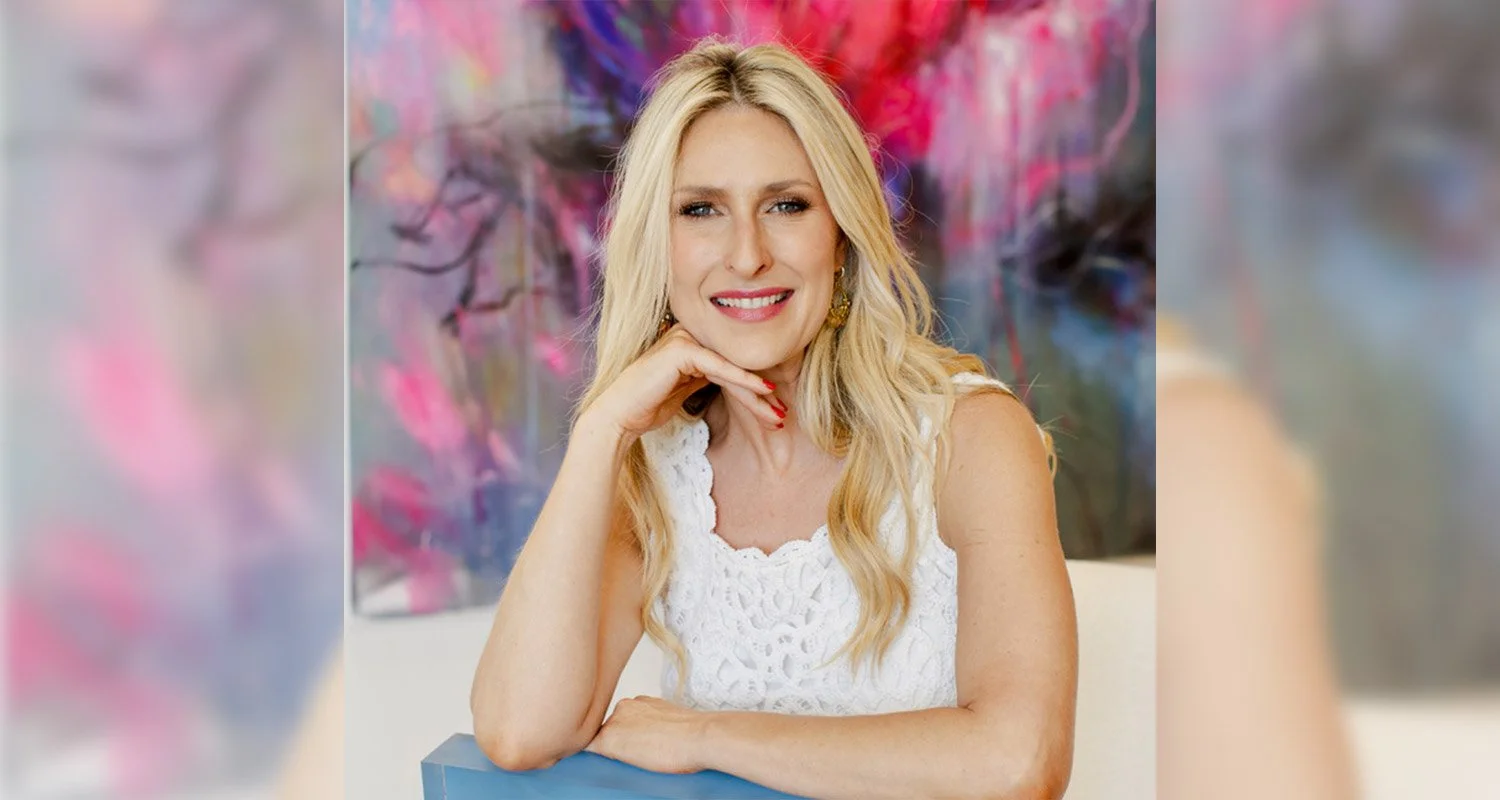
ABOUT DR SIMONE SILVER
Dr Simone Silver (“The Integrated Doctor”) graduated with her medical degree from the University of Witwatersrand in 2007.
Even as a medical student, she was intrigued by the concept that not only are all the body systems connected in an intricate manner but that a network of environmental, psychological, hormonal, genetic and dietary factors all influence physical and emotional well-being and propensity for disease. Over the years, as her studying branched into the field of Functional Medicine, her interest in individualised healthcare became an inexhaustible passion.
She practised at the Integrative Medical Centre in Johannesburg until 2014, when she moved to Cape Town and opened her own practice, Hormonal Health and Wellness Centre, and then moving to a beautiful new premises in the V & A Waterfront in August 2025. Dr. Simone lectures to both healthcare professionals and patients alike.
Her areas of particular medical interest are Hormonal Imbalances across all ages, particularly in women, Menopausal Health, Chronic stress and Burnout management. Her fascination with the interplay and complexity between health and factors such as environmental, social, hormonal and genetic factors soon became an inexhaustible passion.
She is passionate about sharing her expert knowledge on Integrated Medicine and her unique perspective of the” Artistry of Health” through speaking and events, both locally and internationally. She values self-growth and awareness and is excited by life’s daily opportunity for continued learning and development.
Dr. Silver says, as “The Integrated Doctor,” "I strive to blend scientific principles with individual uniqueness, treating medicine as an art form.”Dr. Simone has a Bachelor of Medicine & Surgery (MBBch) Medicine There are so many unbelievable angles that one could take from an interview point of view with regards to these issues that women face.
Podcast Transcript
Prefer to read instead? Here’s the full transcript from this episode of the Baby Brunch Podcast.
Short on time? Scroll to the key takeaways below.
DR SIMONE SILVER
This crisis of rushing and automatic living keeps us in a spiral. It keeps us in this loop of repeat.
And what that does is block our mental space and our physiology from accessing joy, peace, calmness, curiosity and wonder.
I do believe this is the crisis of our times.
ELANA
Today is going to be quite interesting, I think, because when I asked today’s guest, “What does a crisis look like?” I realised that this is a conversation we need to have, because crisis looks so different for everyone.
Some of us are listening because something really happened. I have a friend who is very, very sick, yet in her body and her mind she feels that she has healed. For most of us, that would be a crisis, but in her life she’s going, “I’m doing just great.”
Another friend of mine lost her dad this week. I phoned her and asked how she was doing, and when she told me, I broke down with her. I’m normally the one who comforts and consoles, but I said, “I don’t think I can hold space today. We’re just going to cry together.”
So today we’re talking about crisis, and I’ve brought in one of the best people to help us.
Dr Simone Silver, also known as The Integrative Doctor, uses transformative health and wellness approaches, blending evidence-based medicine with a deep understanding of the interconnectedness of mind, body, soul, environment and culture.
She empowers people to take ownership of their health journey. She talks about reimagining ageing, hormones and health — so why don’t we reimagine crisis?
Simone, welcome to Baby Brunch.
DR SIMONE SILVER
Thank you for having me.
ELANA
The concept of crisis differs for everyone. Before we assume that we’re in crisis, what does crisis actually look like?
DR SIMONE SILVER
A good place to start is that a crisis is a situation of stress or distress — a disruption that is so far beyond our normal day-to-day experiences that we cannot respond to it with our usual coping skills.
Basically, we feel completely overwhelmed.
ELANA
Is it physical? Is crisis mental? Do I feel it in my body or in my mind?
One of my girls asked me the other day, “Mommy, where will I feel it?” We were talking about emotions, and she said, “I’ll feel it in my stomach.”
If I’m going through a life crisis, where is it? Is it just external? Because it feels like it’s also in my body.
DR SIMONE SILVER
Totally. We cannot separate mental health and physical health, or mind and body. They’re interconnected.
That is critical to understand when we’re dealing with change, stress or crisis. There will be a physiological impact. We’re going to feel it physically through symptoms or experiences in the body, and we’ll also have mental or emotional shifts.
It’s also important to realise that there are different types of crises.
We might have a physical or medical crisis involving disease or a car accident. But we could also be going through something more internal or mental, like an identity crisis, the loss of a relationship or perhaps the loss of a home.
There really are many different types of crises.
ELANA
Sometimes when something uncomfortable happens, we make light of it. It’s almost like comedy — serious events can become something we joke about.
I’ve seen these videos online where it says, “This is who my family thinks I am,” and the mom is nurturing everyone, picking up washing and quietly closing doors.
Then it cuts to, “This is who I really am,” and the woman takes out a chainsaw!
Could crisis be like that? People might not see it from the outside, but inside it feels agonising. You actually want to take the chainsaw out.
DR SIMONE SILVER
You often see very different responses from different people. There is no “normal” way to respond to a crisis.
Some people shut down completely. They want to avoid what’s happening and go into denial.
Others respond with intense sadness, despair, grief or hopelessness.
And others respond with pure rage and anger — the chainsaw comes out!
I smile at your analogy because I see that in menopausal women every day. There is such a shift in hormones, and one of the most common things women say is, “The rage is real. It wasn’t there before. What is going on?”
ELANA
Who notices the crisis? Do I notice it first, or could somebody else — perhaps a best friend — look at me and think, “She’s going through a crisis. We need to help”?
DR SIMONE SILVER
Definitely.
You can be in a crisis without really knowing that you’re there.
Often the first input we receive comes from a friend or family member saying, “You just don’t seem like yourself,” or, “These responses or behaviours don’t seem like you.”
Obviously, we’re talking about crises that aren’t immediately obvious, like a car accident or physical emergency.
It is so important that we remain aware of our loved ones because people go through crises silently.
We see this every day as healthcare professionals. Somebody might come in because of a sore elbow, but give them enough time and inevitably some kind of internal crisis may emerge when they’re given the opportunity to voice it.
We’re simply not given enough opportunities to speak about our crises.
ELANA
That reminds me of something that happened recently.
I was at the airport travelling for business. Next to me was a dad with a little boy, and I suspected the child experienced the world a little differently. I had a lot of grace for him.
When we got off the flight, the family was rushing. From what I could tell, they weren’t rushing because they actually needed to be somewhere. It was just the rush of life.
I felt sad for this child because I thought he would have loved the experience and adventure of the flight — moving through the corridors, wondering where the planes were going, deciding whether to take the lift, stairs or escalator.
Instead, he was being dragged along.
And I thought: aren’t we in a crisis of rush?
As parents, are we rushing? We had the baby — so why aren’t we taking our time? What are we rushing for?
DR SIMONE SILVER
That’s such a beautiful example.
We do live in this crisis of rushing today, and it leads to an automatism of living from one thing to the next.
We don’t stop. We don’t pause anymore. We don’t take things in.
And it’s such a shame because this rushing and automatic way of living prevents us from stopping to really see and engage with the world around us with curiosity.
This crisis of rushing and automatic living keeps us in a spiral. It keeps us in a loop of repeat.
And that blocks our mental space and our physiology from accessing joy, peace, calmness, curiosity and wonder.
I really do believe this is the crisis of our times.
That little boy had this incredible experience of being on an aeroplane, with so much to stop and take in and learn, and it was lost in the rush and automatic motions of living.
But we have a choice. We can choose to step out of it.
First, though, we need awareness. Most of us aren’t even aware that we’re rushing anymore. Living from one task to the next has become normalised.
ELANA
Do you think we’re overreacting because our parents just got on with it?
DR SIMONE SILVER
No, I don’t think we’re overreacting.
I think we’re more in tune, more aware and more vocal. We have more permission today to be honest about our experiences.
We’re rejecting the old belief in keeping a stiff upper lip and saying nothing.
I don’t think we’re overreacting. I think we’re bringing truth to the challenges of our experiences.
ELANA
What are the symptoms of crisis? What should we look out for?
DR SIMONE SILVER
They vary from person to person and can be emotional or physical, often in different combinations.
Emotionally, it might be feeling hopeless, experiencing excessive despair, feeling deeply sad, overwhelmed or worthless, or experiencing intense anger and rage more often than usual.
We all experience a spectrum of emotions — that’s normal. I’m talking about emotional changes that persist for a significant period and aren’t in keeping with your usual nature or demeanour.
Physically, when we’re in crisis or distressed, we experience the typical symptoms of an activated nervous system.
Our heart rate goes up, our breathing may change and we may start sweating. It’s almost as though the body is galvanising itself and preparing to fight.
So crisis can be both very mental and very physical.
ELANA
What does a life crisis look like?
DR SIMONE SILVER
We commonly use the label “midlife crisis”, and I challenge that narrative.
I think it should be the midlife awakening, midlife reinvention or midlife rising.
It becomes a crisis because our bodies change — particularly for women as our hormones change — and that can create incredible shifts in our experiences.
Women tell me, “I feel like I’m losing my mind. This isn’t me.”
For too long, women have been made to think that this is all in their heads. Today we know that isn’t the case. Female hormones have a profound effect on emotion and neurochemistry.
The “crisis” in midlife crisis is often simply change that we weren’t prepared to navigate and don’t understand.
That’s why I’m so happy about the education happening around perimenopause and menopause. We have to understand what is happening before we can navigate the change.
Transition is hard. Change is hard. It’s unknown. Our bodies become unfamiliar to us. The way we see ourselves and the world changes.
But I don’t believe this needs to become an ongoing crisis. There is absolutely an opportunity within this change to thrive if we learn to navigate it with awareness and curiosity.
ELANA
So we don’t need to be so hard on ourselves?
DR SIMONE SILVER
Oh my gosh, completely.
After 14 years of talking to women every day, one thing I’ve learned is that we are incredibly hard on ourselves.
I often ask patients, “Would you speak to your child like this? If an animal were ill, would you berate it, or would you nurture it, encourage it and be gentle?”
Of course, the answer is that they would be gentle.
So why can’t we direct that same gentleness towards ourselves?
Compassion is one of the tools we can use to manage change and crisis.
“I’m going through a lot. I need some space. I need to take it slowly. I need to pause. I need a break.”
We all need breaks. We all need rest.
ELANA
I want to hold space here for every mom or person who wants to have a baby and is experiencing the crisis of being unable to conceive.
I’m holding space for anyone who has just had a baby and doesn’t know how to hold or look at them.
The first six weeks and beyond were very hard for me when I had my babies. I adore my children, but I remember that the beginning was really, really tough.
If I stripped you of the titles, social applause and all the amazing things you do, can you think of a crisis in your own life? What did it look like?
DR SIMONE SILVER
Thank you for giving me permission simply to be a woman with a voice.
Transitioning into motherhood was a crisis for me.
Again, I was so hard on myself. I thought, “Why is this so hard for me? Everyone else seems to be sailing through this. It seems to come naturally to everyone else, and I’m finding it so difficult.”
It took me a good few years to settle into how my life had changed, how my perspective had changed, and how my relationship with time and work had changed.
Previously, I measured a lot of my output and value through work. I couldn’t work in the same way anymore, and I couldn’t understand why.
I went back to work trying to operate exactly as I had before having children, and I burned out.
My capacity now needed to be spread differently.
Eventually I realised, “I can’t do it the way I did before because I’m not who I was before. I’m a changed woman. I’m a mother now.”
What does that mean for my life? How I use my time? How I use my resources?
We love our children to death, but can we, as women, talk openly without shame about the fact that mothering is hard?
Very hard.
ELANA
How do we know the difference between a crisis and simply having a bad day?
DR SIMONE SILVER
We should differentiate between a rough day and a crisis.
Stress is a normal part of life. Stress is essentially any demand or challenge — something that challenges our peace or sense of control.
Most of us meet those demands every day. It isn’t always easy, but we can do it.
That’s different from crisis, where we become completely overwhelmed or paralysed. The situation is so far beyond what we’ve experienced before that we almost become incapacitated in the moment.
In psychology, a crisis is generally relatively short-term. It could last hours, days or weeks, and often by four to six weeks there has been some form of resolution or the problem has been addressed.
But there are also ongoing crises. Divorce is a good example. It doesn’t end quickly because there are multiple layers involving children, legalities and finances.
Then there is chronic stress and trauma, which relate to how we process and integrate what we have experienced.
ELANA
Are there early warning signs before a crisis hits, or is it usually sudden?
DR SIMONE SILVER
It depends on the type of crisis.
Something like a heart attack or an earthquake can happen without warning.
But with an internal crisis, there might be rumblings beforehand — questioning yourself, questioning your values, not knowing where you fit into the world or what your place is.
Those can be healthy questions, but if they lead to intense anxiety and overwhelm, they may be signs of an internal crisis.
ELANA
Can an external crisis — losing money, for example, or your house burning down — eventually manifest physically? Can you become physically ill because of an external crisis?
DR SIMONE SILVER
Absolutely.
We have enormous amounts of scientific evidence demonstrating the mind-body connection.
We don’t only respond mentally or psychologically to an external crisis. There is a very real physiological response involving the brain, stress response and hormonal systems.
If those systems remain unhealthy or dysregulated for long enough, they can contribute to disease.
ELANA
I often believe that a crisis can eventually become a blessing.
Anything in my life that has felt incredibly disruptive — not just mildly uncomfortable, but “What on earth is happening?” uncomfortable — has eventually turned into something else.
Can crisis be productive?
DR SIMONE SILVER
The first thing I want to say is that we must never take away from the very real trauma and difficulty of the crisis itself.
It can be agonising.
We should never dismiss someone’s experience by saying, “Well, you were hijacked, but you weren’t shot, so you’re fine.”
That person may be living through the trauma of nearly losing their life.
But over time, as we process and integrate the crisis and begin making meaning of it, it can become an incredible blessing.
We can find a new perspective on life, learn something about ourselves, experience an awakening or deepening, and make different choices.
Once a crisis has been processed and supported, we can choose how we carry it into the future.
ELANA
You’ve written that crisis can be a teacher and a gift.
DR SIMONE SILVER
Absolutely.
Think about moments of crisis, challenge or disruption in our lives. We are pushed to the edges of ourselves. We ask so much of ourselves and are forced to reflect, grow and respond in ways we’ve never had to before.
There can be immense growth in crisis and in finding resolution.
Growth is one of life’s great gifts. We have an innate human need to keep growing, deepening and enriching ourselves.
There is something incredibly life-affirming about growth.
ELANA
If you are in crisis or have experienced trauma, who do you see?
DR SIMONE SILVER
In the professional world, ideally you want a team.
Speak to a psychologist, GP, trauma counsellor or social worker. Your GP can also refer you to the right professional.
Usually, we need a network or team of support around us.
And if you don’t have that or don’t even know where to start, just tell someone.
Get help and tell someone.
When we’re in the middle of crisis, we often cannot help ourselves. We can become paralysed to some extent, so telling somebody else can put a plan of support into motion.
That doesn’t mean you’ll remain there forever.
ELANA
Eventually you can help yourself again.
I also find social media one of the hardest places to be when you’re in crisis.
DR SIMONE SILVER
Completely.
It can be such an unhealthy environment when you’re struggling because it can feed insecurities and anxieties and almost keep us stuck in that state of crisis.
As we start coming to grips with what’s happening, we become increasingly able to help ourselves.
Being gentle with yourself and consciously nurturing yourself also means being aware of what you expose yourself to — books, radio, conversations, positive material versus negative material.
All of it has an impact.
We can step out of a negative spiral of stress and trauma and move towards a more positive spiral.
Our thoughts, attitudes, beliefs and what we expose ourselves to can influence both mind and body.
We really can become the captains of our own ships.
ELANA
Neurologically, where do trauma and crisis sit in our bodies?
DR SIMONE SILVER
It all begins in the brain.
The brain receives information from our senses and environment: are we safe, or is there a threat?
But the information doesn’t always come from outside us. We can have a negative thought about ourselves, and the brain can still interpret that as a stressful or distressing signal.
The brain then coordinates a response throughout the body, including the hormonal and nervous systems, and prepares us to fight.
That’s the fight-or-flight response.
It’s primitive and it exists to keep us alive.
When we see people saying cortisol is a “bad” hormone and stress is always unhealthy, we need to remember that we require a certain amount of stress.
A short-term stress response that switches on when appropriate is healthy.
But a healthy stress response also needs to switch off.
That’s part of the problem with the chronic stress we see today. We aren’t cavemen running from lions anymore. Our challenges are parenting, finances, crime, gender-based violence and all the other pressures of modern life.
The body can remain permanently switched on.
That can make us feel wired, agitated and panicky. We may struggle to sleep.
Eventually, if we don’t regulate that response, the system can become increasingly dysregulated and lead towards burnout — low mood, depression, lethargy and fatigue.
Short-term stress can be healthy. It can even help us meet a deadline or perform at work.
Long-term stress is different. We have to actively manage it to protect our mental and physical health.
ELANA
What’s your opinion on medication during a time of crisis? Should we use medicine or supplements, or should we rather focus on self-work, patience, breathing and speaking to a psychologist?
DR SIMONE SILVER
It’s such an important question because this is exactly what I think about as a practitioner when I see a patient.
What is the appropriate treatment for this particular person?
We have to consider the extent of the crisis, whether the person is showing resilience or adapting, whether they are completely overwhelmed, and how long it has been going on.
Different tools and treatments need to be tailored according to severity.
If you’re experiencing relatively mild chronic stress, feeling tired and your mood isn’t as bright as usual, self-work, personal growth, deepening your connection to yourself, appropriate supplements, nutrition and good sleep might completely transform things.
But if you’re showing signs of depression or persistent anxiety that feels crippling, those are red flags. Medication may sometimes be appropriate for a period to help you step out of that spiral.
There are different layers and stages.
ELANA
What about self-medication? As parents, we often know our children incredibly well. We know when they need to sleep, when something isn’t right or when we need to see somebody.
But sometimes we’ve spent so much time understanding our children that we don’t know what we need.
How much do you trust us to medicate ourselves?
DR SIMONE SILVER
It’s a great question to ask a doctor!
I’m torn because there is something wonderful about autonomy — being able to walk into a health store and choose supplements or over-the-counter products to tend to yourself.
But deciding whether to self-medicate or seek professional help requires a lot of self-awareness.
Where are you on the spectrum of stress and distress?
Are your symptoms mild enough to manage through self-care, or are you severely depleted and needing help?
Remember that when we’re in the crisis ourselves, we often don’t know where we are. We may not have that self-awareness.
There’s an important line where you need to be able to say, “I’ve crossed the line. Here and no further. I need help.”
If you’re not sure, rather seek help and get guidance. An objective professional may assess you and say, “Actually, you don’t need medication. Let’s focus on self-care, supplements or other forms of support.”
That reassurance itself can be incredibly healthy.
ELANA
And what about the person who says, “Well, if you don’t give me the pills, I’ll go somewhere else”?
DR SIMONE SILVER
That is a huge challenge today because we’ve become so accustomed to instant gratification.
There can be resistance to putting in the work and effort.
True healing at the root of disease or imbalance requires time, patience, a holistic approach and a willingness to walk the journey.
That is very different from simply fixing a symptom with a pill — although medication absolutely has its place.
I would challenge us to think about what it means to build health, vitality and wellbeing.
It’s like building a house. There is a process involved.
Going only for instant gratification can be like repeatedly plastering over a crack in the wall.
I’d love to see people embracing a slower, more holistic approach.
ELANA
Someone recently told me, “I’ll sort myself out when the kids are bigger.”
And I thought: what if?
We always feel there’s no time.
DR SIMONE SILVER
“I’ll do it when…” is dangerous because “when” may never come.
We’re not guaranteed tomorrow.
The time is always now.
The small changes we make today to our physical health can produce rewards for years and years to come.
Think about it like investing. We’re taught to put money aside and invest for retirement.
Health is the same.
We need to invest in our future health because we can change what our health looks like in 10, 20 or 30 years.
And I want to challenge this idea that there is no time.
I understand it. As a working mom, I often feel the same.
But the truth is that for anything worthwhile, there is time.
It requires conscious effort to carve it out. It may mean sitting with your schedule, blocking out time or reprioritising.
As women, we often put everything else first. Time for ourselves is the thing that gives, so it never happens.
I’d love to see us starting with ourselves sometimes.
If I fill my cup, meditate or have my cup of tea, then I can give to everything else from a fuller cup.
ELANA
I also challenge the idea that it all has to happen in the morning.
My children are still small, I’m a working mom and my husband works too. I cannot wake up at 5am to meditate because my household starts at 5:30!
So I literally do one minute.
I wake up, thank God for the day and spend one minute listening to something on my Bible app.
Then the day starts. Bags, hockey, music books — everything flies!
And I have what I call “the launch pad”.
It’s an open cupboard at my front door where everything we might need is ready: deodorant, plasters, lip balm, glue sticks, hair ties, a brush, even a toothbrush.
Everything happens in the house until you get to the launch pad, and that’s where, in the final five minutes, you save your soul!
My husband also does school drop-off.
I know my own mental bandwidth. I’ve had my one minute of meditation, and I know that my bandwidth cannot take more.
DR SIMONE SILVER
I love that.
Firstly, that minute you give yourself matters.
It doesn’t matter that it’s only a minute.
A minute matters. A second matters.
And I love the truth in knowing your own bandwidth. That is such an important skill as a working mom — and as a human being today.
You have to know your bandwidth and recognise when you need gaps between moments of intensity.
ELANA
What is ultimate peace?
If crisis feels terrible, what does peace feel like? What is it supposed to give me?
DR SIMONE SILVER
For me, it’s a sense of calm.
There’s clarity in my thinking.
It isn’t disordered chaos or overwhelm.
It’s clear. It’s calm. It’s slower. There’s substance to it. It’s grounded.
And for me, the heart space is very much about acceptance.
Life is hard. Tragedy happens. Trauma happens. That’s part of life and we can’t get away from it.
We will go through loss and grief. We’ll experience all of these human themes in a lifetime. Nobody is spared.
But we shouldn’t have to struggle alone.
Finding peace and the right help and support is incredibly important.
ELANA
Can you give us a practical exercise to centre ourselves, especially during a time of crisis?
I’ll share something I do.
When I’m overwhelmed or feeling disconnected, I go outside to this patch of grass where my dog runs around. There’s mud, there’s dog poop and there’s a little bit of grass!
I take my shoes off and literally stand in the mud.
I close my eyes and cry.
After about 10 minutes of standing in the mud and feeling sorry for myself, I usually have the best days.
DR SIMONE SILVER
That is so powerful.
There are so many beautiful tools in what you’re describing.
One is using your senses to regulate yourself. You put your feet in the mud. You can feel it. You’re grounding yourself, stimulating your senses, triggering emotion and then allowing a release.
Navigating crisis and challenge well is also about how well your head and heart connect and communicate.
The first step is understanding and naming the emotion you’re feeling.
Is it anger? Is it sadness?
I tune into my heart space and scan my body.
What is here for me? What is coming up? Am I agitated? Am I heart-sore? Am I sad? What is going on?
It’s simply awareness.
I don’t necessarily need to do anything with it or understand it immediately.
“This is where I am right now, and it’s okay.”
Then you allow yourself to release.
Sometimes we don’t understand our emotions. We can go to therapy and talk for years and still not fully understand the deepest layers.
But we can find ways to express and release emotion.
For some people that’s crying. Others journal or write. Some people need physical movement or exercise.
Find a mode of expression that works for you and keep tuning in.
We need more pause moments.
And that’s another beautiful part of what you’re doing: you intentionally go to that patch in your garden.
You intentionally choose to pause and check in.
That is incredibly powerful.
ELANA
Do you think we’d have fewer crises in our lives if we stopped rushing?
DR SIMONE SILVER
I believe so, on many levels.
Physically, we would be less stressed because we would allow the body and mind time to switch off, which is much closer to our natural healthy rhythms.
We’re not supposed to be “on” with an activated nervous system all the time.
That simply isn’t the law of physiology.
We all need rest. Nobody is exempt from that.
Yet we don’t give ourselves permission.
“What? Me? Rest? The working mom? The CEO? There’s no time for that.”
But we’ve normalised something that isn’t normal.
The body needs food and rest.
When we ignore the natural laws of the body, we do so at our peril.
Psychologically, rushing also keeps us away from pause moments.
We become less self-aware, less mindful and less peaceful.
We become more conflicted and more stressed.
It becomes a never-ending spiral.
So physically and psychologically, I believe we would absolutely be better off if there were less rush.
ELANA
I feel like I need a quote from you.
One of mine is, “Expect a miracle every day.”
I have another one.
I don’t hide my emotions from my children. If I’m upset, I’ll show them. If I’m angry, I’ll say, “I’m very angry and I just need some time.”
One day I was upset and standing in my dressing room looking at myself in the mirror with tears in my eyes.
My little girl, who was seven at the time, wrote me a message saying, “It’s great.”
I kept it.
So when I think, “My God, there’s no way out of this situation,” I look at that little note in her handwriting.
All I know is: it’s great.
DR SIMONE SILVER
And even if it doesn’t appear to be great right now, in this moment of challenge or distress, there is this sense that it will be okay in some way, shape or form at some point.
There’s incredible acceptance in that.
The quote that comes to mind for me is from William Blake: “To see a world in a grain of sand…”
For me, it evokes this feeling that if we slow down enough, we can find galaxies in a grain of sand.
We can find dimensions within ourselves.
We can find resources and resilience that we never knew we had.
We can tap into enormous resources within ourselves.
Another quote that speaks beautifully to what we’ve discussed is from Eckhart Tolle: “You find peace not by rearranging the circumstances of your life, but by realising who you are at the deepest level.”
That’s what this is really about.
Who you are and the choices you make.
We cannot control everything external to us, but we can be the captains of our own ships.
We have power over our own journeys, responses and choices.
Never forget that. Never give up that power.
ELANA
Dr Simone Silver, thank you so much for joining us on Baby Brunch.
Transcript edited for clarity and readability.
Key Takeaways
A crisis is more than a bad day. Crisis occurs when an experience overwhelms our usual ability to cope, leaving us feeling paralysed or unable to respond in our normal way.
Crisis affects both mind and body. Emotional distress can trigger very real physiological responses, including increased heart rate, changes in breathing, difficulty sleeping, agitation and fatigue.
There is no single “normal” response to crisis. Some people withdraw or go into denial, while others experience sadness, hopelessness, anxiety, anger or rage.
Loved ones may notice before we do. A friend or family member saying, “You don’t seem like yourself,” can sometimes be the first indication that something deeper is happening.
Modern life has created a “crisis of rushing”. Constantly moving from one task to the next leaves little room for curiosity, joy, calmness or simply experiencing the moment.
Motherhood can be an enormous identity transition. Dr Simone describes becoming a mother as a personal crisis because her previous measures of productivity, time and identity no longer worked in the same way.
We need to stop being so hard on ourselves. Self-compassion, rest and recognising when we need space are important tools when navigating change and overwhelm.
Crisis can eventually lead to growth. This doesn’t mean minimising trauma or forcing positivity. Once an experience has been processed and supported, it can lead to new perspectives, resilience and deeper self-understanding.
You don’t need to struggle alone. A GP, psychologist, trauma counsellor, social worker or trusted person can help put support in motion when you feel unable to do it yourself.
Not all stress is bad. Short-term stress is a normal and useful physiological response. The problem comes when the nervous system remains activated for prolonged periods without adequate opportunities to recover.
Treatment depends on severity. Self-care, nutrition, sleep, personal growth and appropriate supplements may help with milder stress, while persistent depression or crippling anxiety warrants professional assessment and may require additional treatment.
The time to invest in yourself is now. Waiting until the children are older, work is quieter or life becomes easier may mean waiting indefinitely. Even a minute of intentional pause can matter.
Know your bandwidth. Recognising what you realistically have the mental and emotional capacity for — and structuring your life accordingly — can help prevent overwhelm.
Use your senses to reconnect with yourself. Grounding, crying, journalling, movement or simply naming the emotion you’re experiencing can create space for emotional release.
Rest is a physiological need, not a luxury. Our bodies and minds are not designed to remain permanently “on”.
Slowing down creates space for peace. More pause can mean greater self-awareness, mindfulness, clarity, curiosity and connection.
Peace does not require a perfect life. For Dr Simone, peace is calm, clarity, groundedness and acceptance — even while life continues to include difficulty, loss and change.