Get Your Toddler Talking Now, with speech therapist Stephanie Thompson
"The most powerful thing you can do as a parent, to help with your child's speech development, is to Read for them..."
In this episode we learn How speech development for our children starts from day one, even before they speak a single word!
In this fascinating episode we are joined by a professional Speech Therapist, Stephanie Thompson. She explains that new research makes it clear: speech development work in tandem with good dental health, facial development, hearing, breathing, and eating.
Brought to you by Epi-Max Baby & Junior - Our Family, for Your Family. Sponsored by Curaprox and supported by Jacaranda FM.
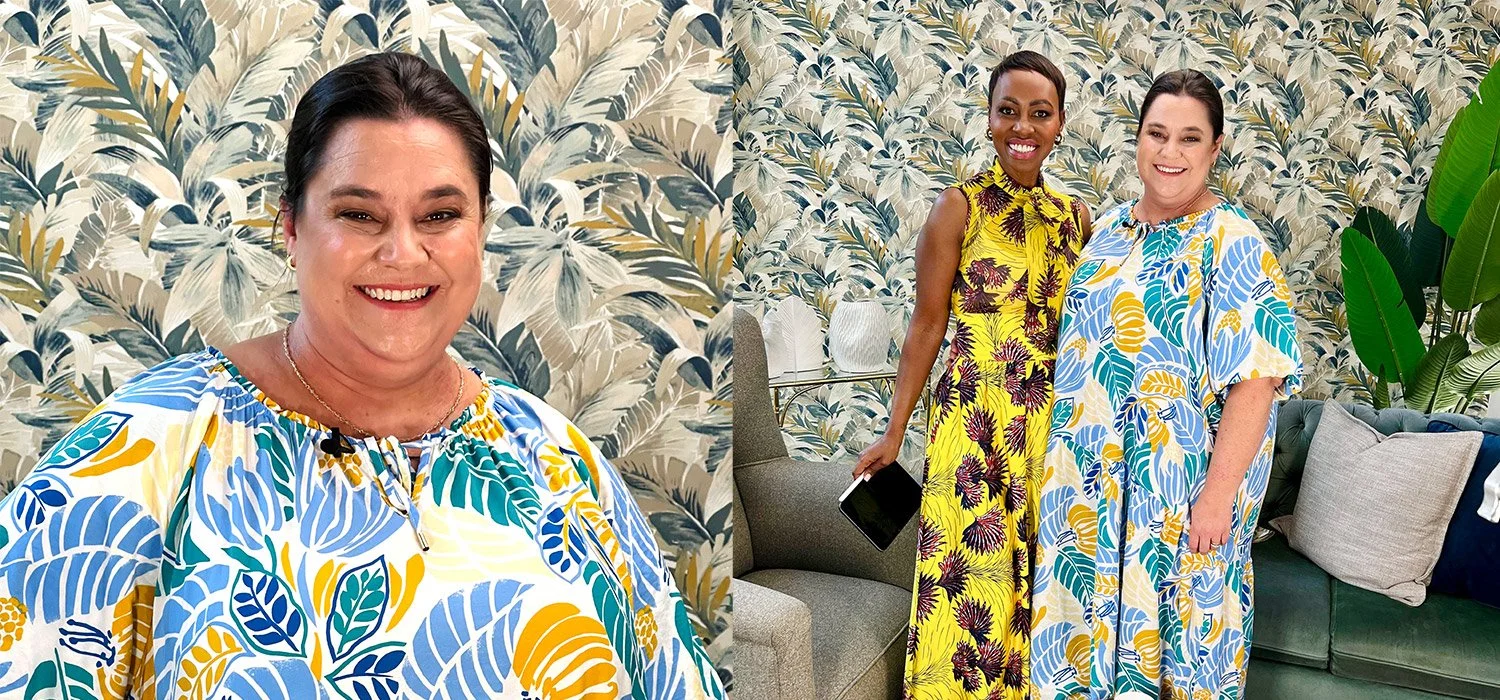
ABOUT STEPHANIE THOMPSON
Stephanie has been active in the field of Speech Therapy for more than 15 years, with a primary focus on working with children. She has worked in both government and private settings, with experience in medical and educational contexts.
Stephanie has been running her own private practice since 2015, based at the ADDnova Centre for Child and Family Development – a multidisciplinary center in Johannesburg. Here, she works alongside a group of wonderful professionals all dedicated to supporting children and families who benefit from therapeutic and/or medical support to optimize their development.
Stephanie is certified to lead Little Steps Preemie Parenting Facilitator Training, as well as It Takes Two To Talk: the Hanen Programme for Parents of Children with Language Delays. She is also certified in a number of additional therapy approaches, including PROMPT (Prompts for Restructuring Oral Motor Phonetic Targets), and Orofacial Myofunctional Therapy (through the US-based Academy of Orofacial Myofunctional Therapy).
In 2024, Stephanie developed and began teaching her own course – Orofacial Myofunctional Therapy for Speech Therapists – in order to support the growth of this field in South Africa. The course has proved very popular and has been extremely well received.
Stephanie lives in Johannesburg with her husband and two young children, and is blessed to be surrounded by her extended family. She loves reading, painting and watching cricket, and always has a new organizing or decluttering venture on the go.
PODCAST TRANSCRIPT
Prefer to read instead? Here’s the full transcript from this episode of the Baby Brunch Podcast.
Short on time? Scroll to the key takeaways below.
HOST
Today on Parent and Baby Brunch, we’re bringing in speech therapist Stephanie Thompson.
Stephanie has been in the field for more than 15 years, and when we received your questions about conversations, thumb sucking, dummies, eating, breathing, speaking, and development, we realised just how difficult it can be to know when something needs extra support.
Stephanie, thank you so much for joining us.
STEPHANIE THOMPSON
Thank you for having me.
HOST
Tell us briefly about your practice.
STEPHANIE THOMPSON
I’m part of a multidisciplinary practice in Welgemoed. We have a team of occupational therapists, speech therapists, physiotherapists, play therapists, and doctors.
We try to support families who are walking a path of developmental difficulty in a holistic way.
HOST
What’s the best part of your job?
STEPHANIE THOMPSON
I get to play with children all day!
HOST
When a parent says, “My child doesn’t talk,” it can feel very overwhelming.
What are some of the common reasons families come to see you?
STEPHANIE THOMPSON
The most common clients I used to see were children with articulation difficulties — in other words, difficulty saying certain sounds.
But the truth is, a child not talking is often just the tip of the iceberg. There are many different areas we can investigate.
It’s not always about answering, “Why doesn’t my child talk?” but rather, “What support is available to help this child communicate?”
HOST
Does speech therapy usually work alongside other forms of medical or developmental support?
STEPHANIE THOMPSON
Absolutely.
No health service should stand completely on its own. We often need input from other professionals.
For example, if a child has had many ear infections and struggles to produce sounds because they can’t hear them clearly, we may also need an occupational therapist or other specialists involved.
Any professional who says they can do everything alone may not be acting in your best interest.
HOST
When should parents consider seeing a speech therapist?
STEPHANIE THOMPSON
For children under three, research shows that one of the strongest indicators of needing support is parental instinct.
There are developmental checklists and milestones, but if a parent or primary caregiver feels something isn’t right, that is often very important.
We have so much information available to us now — books, apps, websites, groups — but sometimes that amount of information causes us to lose touch with instinct.
Information is helpful, but instinct matters.
HOST
I love that. Follow your gut.
I’ve also seen parents teaching very young babies sign language. Is that actually helpful?
STEPHANIE THOMPSON
Yes.
Many speech therapists follow an approach called total communication. The idea is that any method we can use to support communication, reduce frustration, and strengthen connection can be helpful.
Baby sign language is usually about teaching key words — things like hungry, poo, or toy. We’re not teaching a full language, but some children really take to it and can communicate before they’re able to form words.
HOST
Can parents make up their own signs?
STEPHANIE THOMPSON
Yes, absolutely.
There are courses and resources available, but the goal is communication between the baby and the people around them.
The key is consistency. Every time you use the word, use the same sign. If it suits your child, they’ll go with you.
HOST
Let’s talk about the face, mouth, and teeth.
How does a child’s face and teeth development affect their speech?
STEPHANIE THOMPSON
The face, mouth, and teeth are the structures we use for breathing, eating, and speaking.
If those structures don’t develop as well as they should, then those functions can become more difficult.
It’s helpful to think of it like a car. Speaking, eating, and breathing well are like driving in Formula One — you need coordination, speed, and control. But if the car itself isn’t functioning properly, it becomes much harder to perform well.
Good structure supports good function, and good function can also positively influence structure.
HOST
Is breathing, eating, and speaking also something a speech therapist can help with?
STEPHANIE THOMPSON
It depends on the speech therapist.
One area I work in is called orofacial myofunctional therapy. It looks at how the structures and functions of the face and mouth influence each other.
If you’re concerned about breathing, a dentist, ENT, GP, or family doctor can be a good starting point.
If your child is breathing through their mouth, it’s important to find out why, because mouth breathing does not support optimal facial development.
HOST
It sounds like everything is connected — breathing, sleeping, digestion, posture.
STEPHANIE THOMPSON
It really is.
If a child has enlarged tonsils and can’t breathe well, they may not sleep well. If they don’t sleep well, they may not grow well or think well.
The mouth is also connected to the gut. If a child breathes through their mouth, it can dry out the oral microbiome, which can have effects further down the digestive system.
HOST
What’s the difference between speech and language?
STEPHANIE THOMPSON
Speech is how what we say sounds.
For example, if a child says “tat” instead of “cat,” that is a speech difficulty — although that can be age-appropriate up to a certain point.
Language is more complex. It includes how we understand words, how we put words together, grammar, and social communication.
Social language is what we’re doing now — eye contact, conversational distance, taking turns, and reading body language.
HOST
When parents notice something, should they panic?
STEPHANIE THOMPSON
It’s normal to feel some panic because we all want our children to be okay.
But the important thing is how we respond to that feeling.
Gathering information can only help. It’s better to know what’s happening and find a way forward than to remain unsure and not know what support to give.
HOST
How can we better support friends or moms in our circles when their child receives a diagnosis or starts therapy?
STEPHANIE THOMPSON
The more we speak about it, the more normalised it becomes.
There can be a perception that therapists are overdiagnosing or overtreating, but that really isn’t the case.
Therapists are busy, and we’re not searching for unnecessary work. We are driven by helping children and families optimise development.
There is no therapist who wants to work with a child needlessly.
HOST
What can parents do at home to support healthy development of the face and mouth?
STEPHANIE THOMPSON
One thing parents can do is support open nasal airways as much as possible.
Children under three can have up to 12 colds a year, so it can feel like they’re always sick — because often, they are.
But if we can support nasal breathing and encourage chewing on solid foods as early as appropriate, that helps development.
Modern diets often include soft, processed foods that don’t require much chewing. Smoothies can be great nutritionally, but they don’t offer the same chewing work.
Heavy chewing helps support facial growth and development.
HOST
What can parents do to encourage strong speech?
STEPHANIE THOMPSON
The single most powerful thing you can do is read to your children.
If you could only do one thing, that would be it.
It’s also important to make sure your child’s ears are working well.
Another powerful tool is catching your child doing something right and praising them specifically. If your child introduces themselves clearly, tell them: “You said your name so clearly, and I’m proud of how you spoke.”
That has far more power than criticising a child for doing it poorly.
HOST
And what about strong language development?
STEPHANIE THOMPSON
The more words children have, the better they can communicate — and later, the better they can read.
Apart from reading, speak to your children often. Narrate what you’re doing. Talk out loud about what you’re thinking. Have quality conversations with them.
But it’s not really about the words — it’s about the love and connection that grows communication.
HOST
Why is it important for children to see a dentist early?
STEPHANIE THOMPSON
A dental home by the age of one is ideal.
That doesn’t necessarily mean a cleaning or dental work. It simply means the child becomes familiar with the dentist.
Dental health affects much more than teeth. Dental problems can lead to pain, difficulty eating, nutrition issues, social embarrassment, and even connections to respiratory, motor, and language development.
It’s something we should monitor from early on.
HOST
Let’s talk about dummies, pacifiers, and thumb sucking.
STEPHANIE THOMPSON
Academically, I would say no dummy is the best dummy.
But as a mom and a human, I understand that sometimes families need a dummy to get through.
The important things to watch are frequency, intensity, and duration.
If a dummy can be removed before six months, it may reduce the risk of ear infections. Before two years, it may reduce the risk of dental changes and related breathing, feeding, and speech changes.
But some children need that soothing for other reasons, and then we may need other professionals to help meet that need before removing the pacifier.
Bottle feeding also comes into this. Ideally, children should move off bottles and onto cups or straw cups around 18 months to two years.
HOST
Can long-term dummy or bottle use cause damage?
STEPHANIE THOMPSON
It can, especially regarding tongue position.
The tongue should rest up against the palate, which supports good facial development.
If a dummy or bottle is in the mouth more than necessary, the tongue sits low, and that can lead to a cascade of effects.
HOST
Can problems with face and mouth development affect hearing?
STEPHANIE THOMPSON
Yes.
Inside the skull are tubes that help equalise pressure in the middle ear.
If those are disrupted, children can experience recurrent ear infections or glue ear. That can affect language understanding, balance, and speech sound development.
If the face doesn’t grow as expected, those tubes may not sit at the right angle, which can contribute to ongoing ear issues.
HOST
What early warning signs should parents look out for with speech and language development?
STEPHANIE THOMPSON
First, trust parental instinct.
Technically, we like to see first words around one year and two-word combinations around 18 months.
Other signs include:
High frustration around communication
Family frustration around communication
A child who is very passive and not trying to communicate
Concerns around understanding or interaction
If you’re worried, speak to someone who can help you gather information — either to calm your anxiety or guide your child’s development.
HOST
We often hear about tongue ties. What exactly is a tongue tie?
STEPHANIE THOMPSON
Everyone has a small piece of tissue connecting the tongue to the floor of the mouth.
We call it a tongue tie when that tissue limits the tongue’s movement or function.
We now understand that the whole tongue needs to rest up in the palate to support good craniofacial development.
A tongue tie can affect speech, breathing, feeding, swallowing, posture, and other body functions.
However, it’s not only about how the tongue looks — it’s about how it functions.
If function is affected, there are different pathways to explore before considering a release or “snip.” That should never be the first step without preparing the system properly.
HOST
Do you work with children who have had ear infections or glue ear?
STEPHANIE THOMPSON
Yes, often.
Some children can have significant ear infections without showing obvious signs.
It’s important for GPs to check children’s ears regularly, and hearing screenings are recommended at least annually from birth to six years old.
Some schools of thought now suggest annual hearing checks up to age 20, especially because teenagers often use headphones.
HOST
Are headphones bad?
STEPHANIE THOMPSON
It comes back to frequency, intensity, and duration.
Headphones aren’t bad if used for a specific reason, at a reasonable volume, and not for extended periods.
As with most things, moderation matters.
HOST
As a speech therapist, how much do we need the dentist?
STEPHANIE THOMPSON
Ten out of ten.
HOST
Ear infections and glue ear — who do we see first?
STEPHANIE THOMPSON
Your GP, and then an ENT if needed.
A good GP has broad, grounded medical knowledge and will know when a specialist needs to join the team.
HOST
What is myofunctional therapy?
STEPHANIE THOMPSON
Myofunctional therapy is the science of how the structure and function of the head and face relate to each other and influence each other.
HOST
Where can people find you?
STEPHANIE THOMPSON
I work at the Adnova Centre for Child and Family Development in Welgemoed.
We don’t have a website, but if you search for us on Google, you’ll find the practice and the team of professionals available to support families.
HOST
Stephanie Thompson has been active in the field of speech therapy for more than 15 years, with her primary focus being children.
Thank you for bringing your knowledge, humour, and warmth to Parent and Baby Brunch. We really appreciate you.
STEPHANIE THOMPSON
Thank you very much. It’s been a pleasure.
(Transcript edited for clarity and readability)
Key Takeaways
Parental instinct matters
For children under three, a parent or caregiver’s concern is often one of the strongest indicators that support may be needed.A child not talking is only the starting point
Speech delays can have many possible causes, and speech therapists look at the bigger developmental picture.Speech therapy often works best as part of a team
Dentists, ENTs, GPs, OTs, and other professionals may all play a role in supporting communication and development.Baby sign can support early communication
Simple, consistent signs can reduce frustration and help babies communicate before they can speak.Breathing, eating, and speaking are connected
The mouth, face, teeth, airway, and body all work together, and challenges in one area can affect the others.Mouth breathing should be investigated
If a child regularly breathes through their mouth, it’s worth finding out why and getting the right support.Reading is one of the best things parents can do
Reading to children strongly supports speech, language, connection, and later literacy.Chewing matters for development
Solid foods that require chewing help support facial growth and healthy oral development.Dummies and bottles should be monitored
Frequency, intensity, and duration matter. Long-term use can affect tongue position, teeth, breathing, feeding, and speech.Tongue ties are about function, not just appearance
A tongue tie should be assessed based on how it affects breathing, feeding, swallowing, speech, posture, and development.Ear health is linked to speech and language
Recurrent ear infections or glue ear can affect hearing, balance, language understanding, and speech development.Early support is not something to fear
Gathering information can help reduce anxiety and guide families toward the right support.