Dyslexia: Strengths, Not Limitation
"Dyslexia is not a disease." It simply needs comfort & patience...
Taking the time to understand how dyslexia works is the first step to offer help, says our guest this week, remedial therapist, Elizna Prinsloo.
From the age of 5, signs of dyslexia might become more prevalent, but without understanding the concept, both parents and teachers might think a child is simply stubborn or lazy. Children could be bullied, mistreated, or shunned.
Learn more about Dyslexia in this discussion that opens our minds to a new way of thinking about this condition.
Brought to you by Epi-Max Baby & Junior - Our Family, for Your Family. Sponsored by Curaprox and supported by Jacaranda FM.
Also available on: Apple Podcasts and Spotify.
ABOUT ELIZNA PRINSLOO
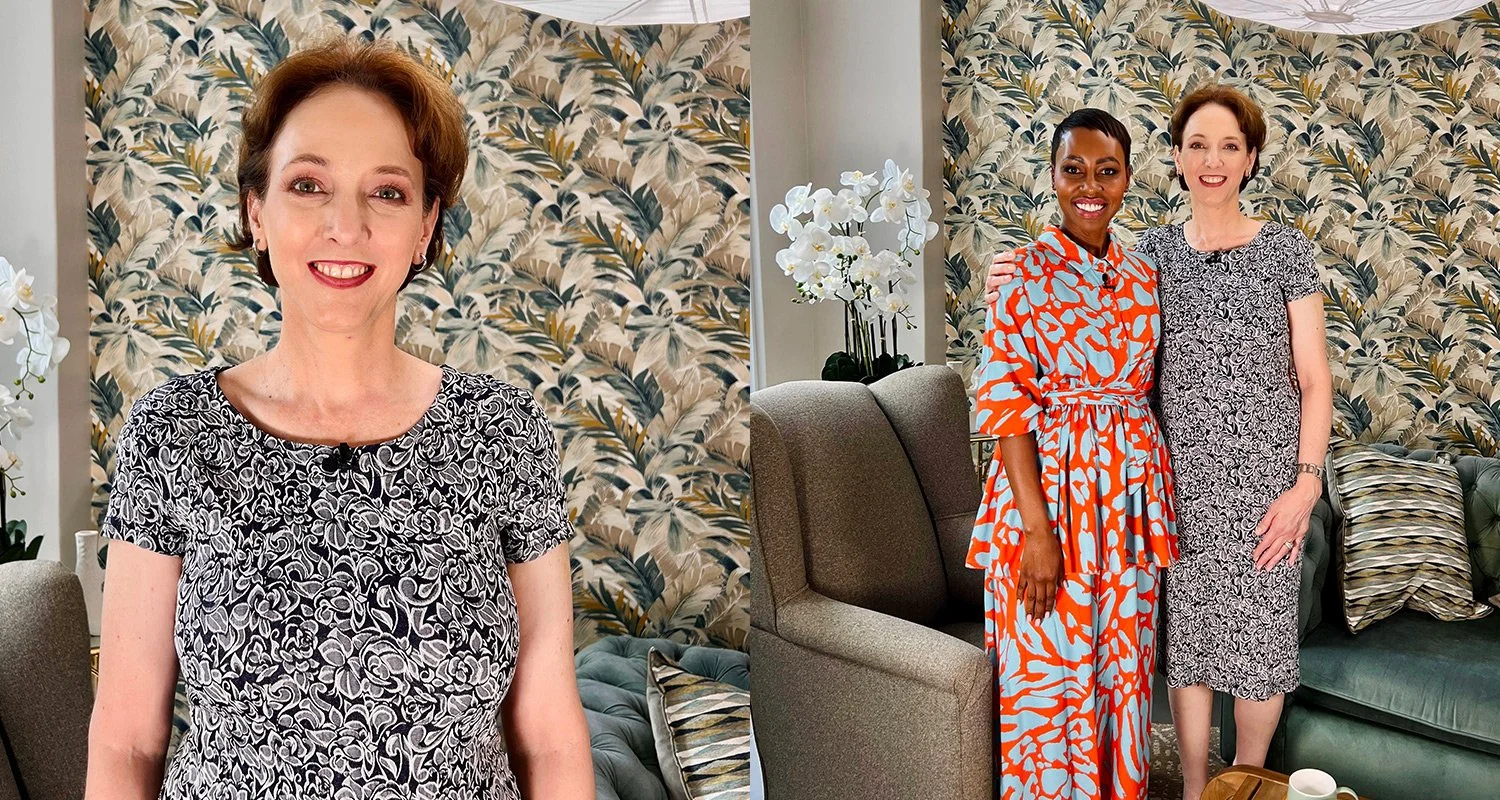
Elizna has been working with children since 1995, bringing more than 30 years of experience in education, remedial therapy and supporting children with learning difficulties and disabilities.
She studied at the University of Pretoria, completing a B.Prim.Ed (Junior Primary) degree and a Diploma in Remedial Education, and later obtained an additional qualification in Children’s Law through a B.Ed (Hons) at the University of the Free State.
Her teaching career saw her work with children from Grade R through to Grade 12, with much of her work focused on learners experiencing learning difficulties and disabilities. She also spent 12 years teaching study skills before moving into this field full-time.
In 2007, she began studying Pastoral Counselling and joined a multidisciplinary private practice as a Remedial Therapist, working alongside Occupational Therapists, Speech Therapists, Play Therapists and Educational Psychologists. During this time, she was also involved in establishing the therapy division of a well-known private school and provided services at a children’s home in Pretoria.
She later established her own Remedial Therapy Practice and today works from her private practice in Centurion, supporting children from the age of five through to Grade 12.
Her areas of focus include reading and spelling difficulties in both Afrikaans and English, mathematics difficulties, Early Childhood Development and school readiness, ADD/ADHD, dyslexia, Autism Spectrum Disorder, study skills, parental guidance and counselling. She also works closely with and refers families to other specialists, including Educational Psychologists, Occupational Therapists, Speech Therapists, Play Therapists, Paediatric Neurologists, Psychiatrists and Dietitians.
Podcast Transcript
Prefer to read instead? Here’s the full transcript from this episode of the Baby Brunch Podcast.
Short on time? Scroll to the key takeaways below.
ELANA AFRIKA-BREDENKAMP
Welcome to another Parent and Baby Brunch podcast.
Today we’re talking about something that I’m truly passionate about. We’re talking about dyslexia — how to spot it, how it is diagnosed, and also how to support our children best through it.
Dyslexia — how it is diagnosed and what to do when you get the news — is one of those things that can sometimes be heartbreaking.
We found one of the best experts, and you come highly recommended. Remedial therapist Elizna Prinsloo, thanks for joining us on Baby Brunch.
Let’s first start with the simple question. What exactly is dyslexia?
ELIZNA PRINSLOO
Dyslexia is a neurological disorder. A person with dyslexia can struggle to decode words and then put them together into a word again.
It’s a visual-auditory problem where what they hear and what they see on paper do not connect, and they struggle to decode it.
ELANA AFRIKA-BREDENKAMP
Could we say that there are highs and lows of it? If we talk about dyslexia, does it look different or vary in severity?
ELIZNA PRINSLOO
It definitely varies. Some people have severe dyslexia, while others will be on the milder side. Some will have only a small degree of it that you can hardly pick up.
But it’s not only a reading disorder. Some people battle to read, others battle with spelling, and others battle to understand what they are reading.
There are different ways of looking at it. People tend to classify it into different areas and give it different kinds of names, but it varies from person to person.
ELANA AFRIKA-BREDENKAMP
Even when you’re explaining it to me, as a parent, when you hear “dyslexia”, what should I understand immediately?
ELIZNA PRINSLOO
My child struggles to decode words and put meaning to them.
ELANA AFRIKA-BREDENKAMP
Why do I feel so sad when I hear it, though?
ELIZNA PRINSLOO
Because everything is built around language. If you can’t read, people think you’re not well educated, that you’ve got a problem or that you don’t have a future.
There are all kinds of things connected to it, and it’s really not necessary.
ELANA AFRIKA-BREDENKAMP
If I have dyslexia, or if my child has dyslexia, does that mean that they’ll never be able to read?
ELIZNA PRINSLOO
No. Most kids learn to read. Some of them a bit later in life, but eventually most kids learn to read.
That’s why we have different systems and ways to teach them how to read. But for some, it will be harder than for others.
ELANA AFRIKA-BREDENKAMP
As a remedial therapist, what do you normally explain to parents? Where does dyslexia come from?
ELIZNA PRINSLOO
Dyslexia is mainly genetic. It tends to run in families.
You also get the odd case where there has been major brain damage or something else that prevents a child from reading, but it’s mostly genetic.
ELANA AFRIKA-BREDENKAMP
If it runs in the family, is it my fault?
ELIZNA PRINSLOO
No, it’s not your fault. You’ve been born like that. There’s no such thing as a fault. Everyone has a little glitch here and there.
ELANA AFRIKA-BREDENKAMP
And we know how to manage our glitches.
ELIZNA PRINSLOO
And we know how to manage them.
ELANA AFRIKA-BREDENKAMP
How common is dyslexia?
I ask because the other day we had a chat with one of our psychologists and we talked about ADHD and about diagnoses and disorders that are sometimes used as buzzwords.
If someone feels that they’re a little bit different, they’ll say, “Oh, you know, I’ve got ADHD.” It’s almost become commentary or something people use casually.
So how common is dyslexia really?
ELIZNA PRINSLOO
It depends from country to country and from one population to another, but overall they say about 15 to 20% of the population has some form of dyslexia, which is quite a lot.
ELANA AFRIKA-BREDENKAMP
In our schools, and especially at home, what does dyslexia look like?
ELIZNA PRINSLOO
There are different ways it presents itself.
From school-going age, the child will usually battle to read, skip words, reverse words or struggle to put meaning to words. That’s the main thing you tend to see.
ELANA AFRIKA-BREDENKAMP
What about writing?
ELIZNA PRINSLOO
Writing, yes. Some tend to make spelling mistakes.
Again, it depends on the kind of dyslexia. Some people struggle to read, some struggle to spell, and some struggle with both.
It differs from one person to another.
ELANA AFRIKA-BREDENKAMP
When looking at dyslexia, what are we looking for?
ELIZNA PRINSLOO
We usually see that the child tends not to know the phonics or can’t put them together. They can battle to hear rhyming words.
Again, there’s that auditory component. They can’t connect what they hear with what they see and then put it together.
We also use something called nonsense words. I always call it “Martian language” because the children understand that much better.
You take different phonics and put them together into made-up words that they have to decode and read. Usually, children with dyslexia battle to do that.
They struggle to connect the phonological with the visual.
ELANA AFRIKA-BREDENKAMP
In the early stages, what do I look for as a parent?
ELIZNA PRINSLOO
They may learn to speak a bit later than other children. They can battle with rhyming and picking up rhyming words.
They may battle to understand what the parent is saying and have difficulties with phonological awareness. They can also struggle to memorise rhymes.
ELANA AFRIKA-BREDENKAMP
From what age onwards should we seek help?
If you see that a child can’t rhyme or perhaps isn’t hearing you, how do I know that it’s time to see a remedial therapist?
ELIZNA PRINSLOO
Very early in life, say at the age of four or five, it’s very hard to see whether it’s really dyslexia or not.
At that point, when I speak to people, I usually go through the whole spectrum. Has the child been to a speech therapist or occupational therapist? Are there memory problems? Is there attention deficit disorder? Those are the kinds of things we look into.
We can start with a speech therapist and occupational therapist.
The occupational therapist can assess whether there are visual-perceptual problems. The speech therapist can start looking at language and phonological processing to see whether the child can really hear the phonics.
Before that, I also prefer to do a hearing test and visual screening to see whether the child can really hear and see properly.
We often look at all these problems in children but don’t start with the basics. The basics are the body. From there, you work towards identifying whether there is another problem.
ELANA AFRIKA-BREDENKAMP
It’s wonderful that you say no problem or issue exists in isolation.
If we look at dyslexia, how many experts are we looking at? So far we’ve talked about the audiologist and the speech therapist.
ELIZNA PRINSLOO
There’s the audiologist and speech therapist.
If we pick up concentration problems, you may go to a neuropsychiatrist or psychiatrist. It must be someone who really knows what they are doing with children.
There are also different programmes for dyslexia and different forms of training available overseas and here in South Africa. We can work with a more sensory approach when teaching these children.
If there are other comorbid disorders, you may need to include other professionals as well.
It’s always a holistic approach.
And, of course, the school needs to be on the same page about everything that’s happening, especially the teacher. The teacher needs guidance on what to do and how to approach it.
ELANA AFRIKA-BREDENKAMP
Dyslexia is everyone’s work.
ELIZNA PRINSLOO
It’s everyone’s work. It’s a community process.
Even though we use a medical model when diagnosing it, it extends into a social context. Everyone is involved and everyone needs to take care of what’s going on.
ELANA AFRIKA-BREDENKAMP
For parents looking for early signs and wondering when it’s time to ask for help?
ELIZNA PRINSLOO
I think late pre-primary school, around the age of five, is when we can start picking up most of these things.
Some children’s language develops a little later.
Language problems can also start with us not speaking enough to our children or not reading to them enough.
ELANA AFRIKA-BREDENKAMP
It’s interesting that you mention that because often, in a household, English might not be the first language, but the child is in a school where English is the predominant language.
Is that dyslexia? Do we need to read more to our children, or is it a language barrier?
ELIZNA PRINSLOO
It can be a language barrier, especially if children are being taught in their second language.
Unfortunately, children with dyslexia can also struggle to pick up a second language easily.
They might speak English at home and battle to read English, and then when it comes to Afrikaans as a second language, especially in high school, it can become a major problem because it isn’t the language of instruction or the language they speak at home.
Mother-tongue instruction is always better.
ELANA AFRIKA-BREDENKAMP
Shouldn’t we be reading more to our children? They’re watching television or screens and learning all these accents.
ELIZNA PRINSLOO
Reading to children is definitely something we need to do more. We need to start very early in life for their language to develop.
But reading to them more isn’t going to rule out whether someone has dyslexia.
I have to reiterate: it’s something in the brain. The brain struggles to decode what the ear is hearing and what the eye is seeing.
Reading develops language, but it’s not going to make dyslexia disappear.
ELANA AFRIKA-BREDENKAMP
This is an actual question that we received: does dyslexia mean that there could be something wrong with our child’s eyesight?
ELIZNA PRINSLOO
No. Dyslexia doesn’t mean that there’s something wrong with the eyesight.
Sometimes people describe letters as “swimming”, but dyslexia itself is not an eyesight problem. It’s about the auditory-visual connection.
A child may see properly but struggle to connect what they see with what they hear when reading.
We do, however, often pick up eye and visual-perceptual problems in children. Those are things that need to be assessed separately.
So there may be children with dyslexia who also have eye problems, but it’s not the main reason for the dyslexia.
ELANA AFRIKA-BREDENKAMP
Let’s go through the steps.
I see that there’s potentially something different in Johnny’s life. He’s in pre-primary and we come and see a remedial therapist. What happens next?
ELIZNA PRINSLOO
First, I have a consultation with the parent and we go through the child’s history.
Sometimes there are already other professionals involved in therapy. I take those reports and analyse everything.
From there, I start referring if necessary.
If we’ve already looked at speech therapy, occupational therapy, perhaps an educational psychologist or neurologist — whoever has been involved in the process — then I will start assessing myself.
I do a diagnostic assessment. We look at whether the child knows their phonics, knows sight words, can read paragraphs, can put meaning to text, and whether they can do what I called the “Martian language” — word-attack skills.
From there, we decide how we’re going to approach it.
Sometimes we get a report from an educational psychologist or psychiatrist suggesting some form of dyslexia, and then we treat it accordingly.
In any case, any child learns better when they’re working with more than one of their senses, so why not use that approach for everyone?
ELANA AFRIKA-BREDENKAMP
When we talk to a parent and take that diagnosis home, what should every parent know?
ELIZNA PRINSLOO
Every parent should know that this is not a death sentence.
Every child has a future. Regardless of their reading speed, reading ability or ability to put meaning to language, there is a future for every child.
ELANA AFRIKA-BREDENKAMP
Should dyslexia rule our households?
ELIZNA PRINSLOO
No, it shouldn’t rule your household.
There are going to be some difficulties. These children get frustrated. They get anxious. It takes them longer to learn.
Mum and Dad will have to provide some help. There are also financial responsibilities with the therapies they may need.
But it shouldn’t rule the house. It doesn’t mean you can’t go on an outing or have family time.
ELANA AFRIKA-BREDENKAMP
Any diagnosis for a parent is overwhelming.
You learn that your child has dyslexia. How do we make our children feel comfortable with this diagnosis? How should we tell them, and how can we handle it better through the language that we use?
ELIZNA PRINSLOO
There are different ways of approaching it, and I feel it always depends on the age of the child.
Some people feel that you have to put a name to it. I think for primary-school children from around the age of 10, it can be easier if they know, “Yes, I’ve got dyslexia. This is what we call it, and this is the reason why I struggle with certain things.”
With little ones, you need to take a bit more care because they don’t really understand what it’s about.
You can simply tell them that they’re battling a little with reading and that it isn’t something they did wrong. It’s something they’ve inherited and now we need to work on it.
Always give them hope and praise them for everything they achieve, so that they know it isn’t their mistake.
ELANA AFRIKA-BREDENKAMP
How often should we attend assessments? We know now that dyslexia is present. How often do we come back?
ELIZNA PRINSLOO
When you start working with the child, you’re actually assessing during every session.
It’s not a formal assessment, but you see the progress the child is making and where the child isn’t making progress.
ELANA AFRIKA-BREDENKAMP
Is there any way that a parent can prepare emotionally for the assessment before they come and see a remedial therapist? What do we tell our child? Where are we going?
ELIZNA PRINSLOO
I usually tell parents to simply tell the child that they’re coming to see a lady who’s going to see why they’re battling with reading and why they’re doing certain things.
It’s not something where you get scores or that you can fail.
We’re just going to play with letters and numbers and see what they’re capable of doing.
ELANA AFRIKA-BREDENKAMP
What should we not say to a child with dyslexia?
ELIZNA PRINSLOO
Don’t ever let them feel as if they’re a failure, because they aren’t.
ELANA AFRIKA-BREDENKAMP
Beyond reading and writing, are there any other areas that can be affected by dyslexia?
ELIZNA PRINSLOO
Mathematics, definitely.
When it comes to reading story sums and instructions, and for children who battle to understand what the teacher is saying, it can become a problem because they simply don’t follow the instructions.
Emotionally, it can become a major problem because these children tend to feel inferior to others.
They don’t want to read in front of a class. Teachers often don’t know how to handle it. Their peers may belittle them or make jokes about it.
Emotionally, it can be a tough life for a child.
ELANA AFRIKA-BREDENKAMP
How can we support our teachers when we know that there’s a diagnosis of dyslexia and suspect that our teachers don’t know how to handle it?
ELIZNA PRINSLOO
We need to make teachers aware of it. We need to teach our teachers how to spot dyslexia and see exactly what is happening with a child.
Sometimes children will reverse letters like B and D and a teacher will immediately say, “This is dyslexia.”
But it’s not always dyslexia. It can be a laterality problem, an eye problem or many other things.
Our teachers need to understand what dyslexia actually is and how to address a child who is battling with it.
How do I need to be softer with that child?
The curriculum that we currently have is very rushed. That can be difficult for a child with dyslexia because they become overly anxious.
How do I need to space letters and sentences in a text?
There are many things we need to teach our teachers.
ELANA AFRIKA-BREDENKAMP
Could a remedial therapist go into the classroom, be present and make a diagnosis?
ELIZNA PRINSLOO
I wouldn’t go in and make the diagnosis, but I could go in and say, “Listen, it seems there’s a problem here. Try addressing it like this and let’s see what happens.”
If it isn’t working, then we can do a diagnostic assessment and see what we can do about that specific problem.
We can determine whether it’s dyslexia, whether it’s something else or whether it’s emotional.
There can be an emotional block because a child has been belittled so many times or because the child believes they can’t read.
ELANA AFRIKA-BREDENKAMP
But as a remedial therapist, you can support teachers to better help our children?
ELIZNA PRINSLOO
Definitely.
There need to be more of us in schools. There need to be more of us doing training.
There are courses available in South Africa and around the world. Some are very intensive and expensive, but there are also short courses.
Or simply get us in there. Let us teach you what it’s all about.
ELANA AFRIKA-BREDENKAMP
Are you up for a challenge?
ELIZNA PRINSLOO
Yes, I am.
ELANA AFRIKA-BREDENKAMP
We’ve never had our experts in the Baby Brunch studio do quick-fire questions on this topic. Usually we leave this for the celebrities!
Are you ready?
ELIZNA PRINSLOO
Let’s see what we can do.
ELANA AFRIKA-BREDENKAMP
It’s true or false — or even yes or no.
Children with dyslexia are better with musical instruments?
ELIZNA PRINSLOO
It depends.
If there’s a visual-perceptual problem and the child can’t read the notes, then it can be a problem.
But if they play by ear and don’t need to read from the score, it can be different. Music is a difficult one because it depends on the child.
ELANA AFRIKA-BREDENKAMP
Dyslexia is formed in the left or right brain?
ELIZNA PRINSLOO
The right brain.
The left brain is supposed to do the decoding for reading, while the right brain is more of a “picture brain” that sees everything as a whole.
ELANA AFRIKA-BREDENKAMP
“There’s nothing wrong with my child. These people just want to make money.”
ELIZNA PRINSLOO
No, not really.
There’s nothing wrong with the child, but there is a disorder that needs to be addressed to make life easier for the child.
ELANA AFRIKA-BREDENKAMP
Children with dyslexia are bullies?
ELIZNA PRINSLOO
No, they aren’t.
Having a learning disability or neurological disorder doesn’t mean that you’re going to belittle or bully someone.
Sometimes, if they get bullied themselves, they might start bullying other children.
ELANA AFRIKA-BREDENKAMP
Our school systems are not equipped for dyslexia in South Africa?
ELIZNA PRINSLOO
Definitely. Our school systems aren’t equipped for it.
Classes are too big, teachers aren’t sufficiently trained and we don’t have enough specialised support.
ELANA AFRIKA-BREDENKAMP
How do we fix it?
ELIZNA PRINSLOO
There are many things.
Smaller classes. Better language instruction. Better decoding instruction. Taking things at a slower pace, especially from Grade R onwards.
Allowing these children to work with sensory stimuli and physical letters when building words. Everything doesn’t need to be about writing.
Unfortunately, it’s something that happens in our school system.
There are some private schools specialising in these areas, but generally it can be difficult to find a school in South Africa that is able to fully address all of these needs.
ELANA AFRIKA-BREDENKAMP
But that’s why we have experts like you, right?
ELIZNA PRINSLOO
Thank you.
ELANA AFRIKA-BREDENKAMP
What’s the one thing you wish every parent knew about a child who has dyslexia?
ELIZNA PRINSLOO
It doesn’t mean the child is a failure.
There’s always hope because we all have different talents.
Focus on the stronger points, not the weaker points.
We all have different talents in life. Help children become experts in the gifts that they have.
ELANA AFRIKA-BREDENKAMP
Elizna, thank you so much for your time today.
Thank you for coming to Parents and Baby Brunch to help so many people with so many questions and for supporting so many parents.
ELIZNA PRINSLOO
You’re welcome.
ELANA AFRIKA-BREDENKAMP
Elizna currently works in a private remedial therapy practice in Gauteng, where she helps children from the age of five through to Grade 12.
She focuses on learning disabilities and supports children with reading and spelling in both Afrikaans and English, as well as maths.
You can find her extensive biography and details on our website.
Visit www.babybrunch.co.za for this podcast and many others.
(Transcript edited for clarity and readability)
Key Takeaways
Dyslexia can affect reading, spelling and the ability to decode and understand written language, and it can present differently from one child to another.
Early signs may include difficulty with rhyming, phonics, language development and connecting sounds with written letters or words.
Dyslexia often runs in families, but a diagnosis does not mean a child cannot learn to read or succeed academically.
Assessment should take a holistic approach and may involve remedial therapists, speech therapists, occupational therapists, audiologists and other professionals.
Reading to children is hugely valuable for language development, but reading more does not cause dyslexia to disappear.
Dyslexia is not simply an eyesight problem. Hearing, vision and other developmental factors should, however, be checked when investigating a child’s difficulties.
Parents and teachers play an important role in protecting a child’s confidence. Children should never be made to feel like failures because they learn differently.
Support at school may include different teaching approaches, more time, multisensory learning and greater awareness from teachers.
A dyslexia diagnosis is not the end of a child’s possibilities. Every child has strengths, talents and a future.